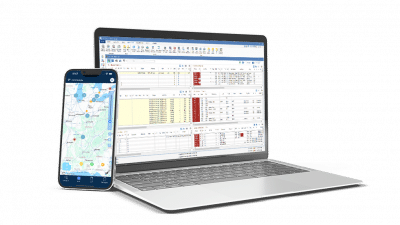
Most transportation management systems fail because they’re sold as one product to fleets running different types of operations. A 40-truck reefer carrier and a 700-truck multi-terminal operation need different things from their TMS. This guide covers what to look for in top TMS software, seven platforms to consider, and which fleet size each one fits.
Why the Right TMS Matters in Trucking
The wrong TMS forces your team to run dispatch and accounting in separate systems, which means double entry, slower invoicing, and reconciliation work that increases with every truck you add. Trucking is about moving freight and tracking drivers, loads, equipment, paperwork, and cash flow. The more trucks you run, the harder that gets.
Chasing down a load or invoice status usually means emailing dispatch or accounting and waiting for someone to check. A carrier TMS puts both in the same database. When a load closes on the dispatch board, that status carries straight into the invoice record instead of waiting on someone to retype it.
What to Look for in Top TMS Software
Many platforms look good in a demo. Once you’re dealing with live freight, drivers calling in, and a dispatcher juggling five screens, the cracks show fast. Six criteria separate the systems that hold up from the ones that don’t.
Dispatch depth
The TMS’s dispatch board needs to assign loads, track them in real time, and handle multi-stop moves across whatever you run: truckload, LTL (less-than-truckload), intermodal, or brokered freight. Intermodal is the real test, since inbound, outbound, and crosstown are three separate workflows, and a board built around truckload logic flattens them into one, which is where it breaks down. Planning matters as much as the dispatch board. Ask whether the system looks across all your loads and drivers at once, or only helps you assign one driver at a time. That’s the difference between fleet optimization and single-load assignment.
Native accounting and settlement
When invoicing, AR/AP (accounts receivable and payable), driver settlements, IFTA, and payroll run off the same database as dispatch, trip data gets entered once instead of retyped into a second system for double entry. Test it with IFTA. Ask whether mileage calculates automatically from dispatch data, or whether someone still keys it in by hand every quarter.
Fleet management
Equipment tracking and maintenance scheduling should pull from the same dispatch data, not a separate app. That way, the system already knows what a truck costs and how far it’s run. It can calculate cost-per-mile on its own, instead of someone pulling numbers from two systems by hand. A standalone tool tells you when a truck needs service. Only one that also sees the loads that truck ran can tell you if it’s making money.
Mobile
The best driver apps do more than display a schedule. They replace calls to the office. Bills of lading (BOLs) and proofs of delivery (PODs) captured by phone camera and signed electronically hit the system the moment the driver takes the photo. Apps should let drivers check pay, PTO, and messages without calling in.
AI and automation
Most buyer guides skip this one. Don’t ask whether a TMS has AI. Ask what it does to your dispatch and planning decisions. Does it recommend driver assignments across your whole fleet, rank incoming freight by margin, and find backhauls? Does it show why it recommended what it did, and can you tune it to your operation? Dispatchers should review and approve. The value is fleet optimization that gives them better options, not a system that decides for them.
Integration breadth
Your ELD, fuel cards, load boards, factoring company, and accounting system all hold data the TMS needs, and any connection that isn’t live becomes manual re-entry for someone on your team. Ask how many of those connections go live during onboarding versus get billed later as a custom project.
Disclosure: PCS Software publishes this guide and appears on the list. We evaluated all platforms using identical criteria, covering dispatch depth, native accounting and settlement, fleet management, mobile, AI and automation, and integration breadth. We held PCS to the standard we applied to every other platform.
The Top 7 TMS Software Platforms Compared
| TMS Platform | Best For | Freight Modes | Rating | Key Differentiator |
|---|---|---|---|---|
| PCS Software | Mid-market carriers, 25–1,000+ trucks | Truckload, LTL, intermodal, brokerage | 4.4/5 (7, G2) | Cortex AI plus dispatch, accounting, and settlement on one database |
| Trimble TMS | Large fleets in the Trimble ecosystem | Truckload, LTL, intermodal, brokerage | 3.7/5 (27, G2) | Telematics and TMS from one vendor |
| Toro TMS | Bulk haulers | Bulk hauling | 4.9/5 (47, G2) | Dispatch, invoicing, and driver pay built around bulk hauling |
| McLeod Software | Enterprise carriers, 500–1,000+ trucks | Truckload, LTL, brokerage | 4.2/5 (43, G2) | Configurable workflows and BI for multi-division operations |
| Rose Rocket | Mid-market carriers and hybrid ops | Truckload, LTL, brokerage | 4.8/5 (15, G2) | No-code workflow builder and AI agents |
| Descartes Aljex | Brokerage-first operations | Brokerage (truckload and LTL) | 4.6/5 (432, G2) | Largest independent review base in this comparison for brokerage TMS |
| AscendTMS | Small carriers under 25 trucks | Truckload, LTL, brokerage | 4.4/5 (9, G2) | Lightweight, low-cost entry point |
1. PCS Software: Best for mid-market carriers wanting all-in-one plus AI fleet optimization
Launched in 1996, PCS Software is trusted by carriers, brokers, and shippers with fleets from 25 to 1,000+ trucks. PCS TMS runs Cortex AI natively inside the platform and puts dispatch, accounting, driver settlement, fleet management, and mobile on one database. Dispatch powered by Cortex looks across your loads and drivers to recommend assignments using 36+ real-time data points, including deadhead and driver home time. Dispatchers see why each recommendation was made, review it, and approve in one click.
What we like: PCS holds 4.4/5 on G2 and 4.2/5 across 240+ reviews on Capterra. PCS carrier accounting customers report a 20-30% productivity gain and a two-to-three-day reduction in the days-to-close cycle, and PCS University backs onboarding with structured certification courses for LTL and intermodal dispatch.
Watch out for: The G2 review count is 7, a smaller number than Descartes Aljex or Toro and there’s no Mac support.
2. Trimble TMS: Best for fleets already on Trimble telematics
Trimble TMS, built from TruckMate and TMW.Suite, spans telematics and transportation management under one vendor. It connects to MacroPoint, project44, and ISAAC Instruments, and offers AI-assisted load planning advice.
What we like: Buying telematics and TMS from the same company simplifies procurement and support escalation. For fleets that already run Trimble in the cab, the data flows without an integration project.
Watch out for: Trimble rates 3.7/5 across 27 reviews on G2, the lowest in this comparison. The multi-product lineup also means you’ll spend evaluation time working out which Trimble product matches your operation.
3. Toro TMS: Best for bulk haulers
Toro TMS is built specifically for bulk haulers. Dispatchers build a load, assign a driver, and send the dispatch from one screen. Invoices are generated from the documents drivers upload from their phones.
What we like: The review scores are the highest in this comparison. Toro holds 4.9/5 on G2 across 47 reviews and 5.0/5 on Capterra across 23. Fast implementation and strong customer support marks in the reviews. Toro says new customers are fully live in 2-3 weeks, with in-person training at their offices.
Watch out for: Built specifically for bulk hauling, so carriers running general freight, LTL, or brokerage should confirm it fits their operation. Newer company with a shorter enterprise track record and narrower feature depth than McLeod, Trimble, or PCS.
4. McLeod Software: Best for enterprise carriers
McLeod Software has been the reference point for large truckload carriers since 1985, and it fits carriers running 500 to 1,000+ trucks with dedicated IT staff and multi-division operations. LoadMaster handles configurable workflows across dispatch, planning, driver management, and business intelligence, with broad connections into MacroPoint and the major ELD platforms.
What we like: The depth is real. Complex rating rules, multi-division accounting, and custom BI reporting hold up at volume where lighter platforms start requiring workarounds. Reviewers on G2 rate it 4.2/5 across 43 reviews and consistently praise functionality.
Watch out for: Long implementation timelines and meaningful IT investment. Below roughly 500 trucks, the configuration work becomes overhead you’re paying for without using.
5. Rose Rocket: Best for teams that want a configurable modern platform
Rose Rocket is an AI-native, cloud platform with a no-code workflow builder and AI agents that handle order building, exception flagging, and route input. It’s SOC 2 audited and well-regarded for UX.
What we like: The workflow builder lets ops teams change how the system behaves without filing a ticket. Rose Rocket is rated 4.8/5 across 15 reviews on G2 with reviewers citing the user-friendly interface and efficient navigation as perks they like.
Watch out for: Less depth in trucking-specific accounting and settlement than PCS or McLeod, so fleets that need native match pay, accruals, and IFTA in the same database should test those workflows carefully. Founded in 2015, so the enterprise track record is shorter than the legacy platforms here.
6. Descartes Aljex: Best for brokerage-first operations
Descartes Aljex is built for freight brokers, with MacroPoint integration and the largest independent review base of any brokerage-focused platform in this comparison.
What we like: The independent rating has the largest review base in this comparison, 4.6/5 across 432 reviews on G2.
Watch out for: No native asset-carrier accounting. Owned trucks at scale alongside brokered freight need a second system, or a platform like PCS that covers both in one place.
7. AscendTMS: Best for small carriers and owner-operators
AscendTMS is the entry tier, built for quick setup, low cost, and operations moving off spreadsheets for the first time.
What we like: Minimal setup and responsive support. Reviewers on G2 rate it 4.4/5 across 9 reviews, with invoicing and load entry cited most often. Plans start at $69 per user per month, with no charges for drivers, trucks, or loads.
Watch out for: Limited scope once you need real accounting, compliance, or reporting depth. Reviewers on Capterra mention occasional bugs, awkward navigation in places, and limited integration with some factoring services.
How to Choose Top TMS Software for Your Fleet
The top TMS software depends on your needs. The best platform fits your fleet and your goals. These three steps will help you during the vendor selection and demo process.
1. Determine your fleet size
Review your fleet size today and project where you’ll be in three years. A platform that fits your 25 truck fleet now may cap when you hit 50 or 100 trucks. That means you’ll need to switch systems again fairly soon. This table gives you a shortlist based on where you are today, or where you expect to be in a few years.
| Fleet Size | Where to Start |
|---|---|
| Under 25 trucks | AscendTMS, or stay on your current tools if they still work |
| 25–100 trucks | PCS, Toro TMS (bulk haulers) |
| 100–500 trucks | PCS, Rose Rocket |
| 500–1,000+ trucks | McLeod, Trimble, PCS Enterprise TMS |
| Brokerage-first | Descartes Aljex |
2. Identify your top priorities
Every platform on this list handles the basics fine and stands out for one or two things. Decide what matters most to your operation, whether that’s accounting depth, how fast you can get live, running multiple freight modes in one system, or AI fleet optimization that touches dispatch decisions itself instead of just reporting on them. This table maps common priorities to the platforms that handle them well and highlights what to confirm from a demo.
| Top Priority | Weigh These | What to Confirm in the Demo |
|---|---|---|
| Accounting and settlement depth | PCS, McLeod | Match pay, accruals, and IFTA run against dispatch data with no export step |
| Implementation speed | Toro TMS, Rose Rocket, PCS | Go-live timeline in writing, and which of the 70+ PCS integrations or vendor equivalents are configured during onboarding |
| LTL or intermodal alongside truckload | PCS, McLeod | Multi-stop rating, revenue allocation, and crosstown moves as native workflows |
| AI that touches dispatch decisions | PCS, Rose Rocket, Trimble | What the system recommends on a load before a human touches it, and whether you can see why |
3. Run a demo on your own freight
Narrow the seven platforms to two or three using your fleet size and top priority, then book a demo with each. Bring your actual lanes and settlement rules instead of sitting through a canned script. The table above covers what to confirm for your top priority, and these questions apply to every finalist.
- Can you take one of my loads from dispatch to invoice to driver settlement without anyone retyping data?
- Which of my ELD, fuel card, load board, factoring, and accounting connections work out of the box, and which cost extra?
- What does implementation involve, and who on my team needs to own it?
- What changes if my fleet triples in size?
- Which workflows come built in, and which would I configure myself?
- Does the AI optimize across my whole fleet, or recommend one load at a time?
Why Mid-Market Carriers Choose PCS TMS
Many mid-market carriers reach a size where spreadsheets, load boards, and disconnected tools can’t keep up. Dispatch and financial workflows are managed in separate places, so invoicing slows down. Nobody has a clear view of what’s happening across the fleet.
PCS TMS is built for carriers who’ve outgrown their ad hoc setup. It puts dispatch, accounting, settlement, and fleet management in one cloud-based system,with Dispatch powered by Cortex recommending driver assignments across the whole fleet, ranking incoming freight by profitability, and showing dispatchers why. Dispatchers get room to plan for margin, not just assign loads. It supports carriers from 25 to 1,000+ trucks, with Enterprise TMS covering multi-terminal operations past 500 trucks. PCS also configures your ELD, fuel card, and tracking integrations during onboarding, so the connections are live before you go live.
Phoenix Cargo operates 400+ trucks out of Columbus, Ohio. Before PCS, the company managed operations with spreadsheets and load boards. With PCS integrated with Compass for factoring, invoicing changed from manual Excel processes to automated billing, and direct email billing sped up the billing cycle. PCS also improved load management and driver utilization, with a focus on reducing deadhead and increasing revenue per mile.
Book a demo and bring a few of your current loads to see how PCS TMS handles them.
Frequently Asked Questions
A TMS, or transportation management system, is software that helps trucking companies manage dispatch, load tracking, billing, driver pay, and maintenance in one place. A good trucking management system streamlines operations and keeps everyone, from drivers to the back office, working from the same information.
TMS providers specialize in end-to-end systems for freight and fleet management, pulling dispatch, accounting, and compliance workflows into one centralized platform. General transportation software may handle routing, compliance, or fuel tracking while stopping short of the full operational control a purpose-built TMS system provides.
Brokers should weigh how the platform handles carrier vetting, load posting, margin tracking, and settlement on brokered freight. Descartes Aljex is built specifically for brokerage operations. Asset-based brokerages running owned trucks alongside brokered freight need a system that covers both, which is where PCS and McLeod fit. PCS runs asset and brokered freight in a single platform, so margin visibility on both sides comes from the same data.
Look for software designed specifically for freight. The strongest systems combine dispatch, accounting, maintenance, and reporting in a single tool. Match the platform to your operation’s size, growth goals, and complexity, then ask each vendor the same questions about settlement depth, AI capability, and implementation timeline.
TMS software is available for fleets of all sizes. Small carriers often start with lighter cloud-based platforms that need minimal setup. Larger fleets need deeper customization, but every carrier benefits from reduced manual work and improved visibility. The practical question is whether the platform you pick at 30 trucks still works at 300, since PCS runs the same system from 25 trucks to 1,000+ and spares you a second migration.
Your return depends on the gap between what you run today and what you move to. Carriers coming off spreadsheets and disconnected tools see the biggest swing, usually in faster billing, fewer keying errors, and better load visibility. The accounting side is where the gain is easiest to measure. When settlement and accounting run against dispatch data in one database, the export-reconcile-rekey cycle goes away, and PCS customers report a 20-30% productivity increase and a two-to-three-day shorter days-to-close cycle.
They aren’t. Some TMS software providers build modular systems specifically for logistics, while others repackage generic software with limited freight functionality. Compare how each platform handles settlements, IFTA, and load margin tracking before you compare demos, and confirm whether accounting is native or an add-on module.
No. Good fleet optimization recommends, and dispatchers decide. The system handles the data work of weighing loads, drivers, deadhead, and home time. Your dispatchers review the recommendation and approve it, with more time to plan for margin.