By Bess Lauer, VP of Marketing, PCS
I’ve sat through a lot of conference keynotes, and most are gone from my head by the time I’m back at the airport. Malcolm Harris’s session at our Customer Summit in Dallas is one I’m still thinking about.
Malcolm hosts What The Truck?! on FreightWaves, and he talks with carriers, brokers, shippers, and executives several times a week. He opened by promising not to give a sales pitch. Then he shared a line from a broker who started his company in 1986: after four decades of freight cycles, this is the first one that’s also a technology cycle.
In past cycles, the winners were often the ones with the most trucks or the lowest rate. This time, Malcolm argued, the winners will be the companies that adapt their technology and operations fastest. His framing was blunt: evolution or evaporation.
The old playbook is breaking
Fraud has become more sophisticated. Theft has become organized. Margins are thin for everyone, whether you’re a carrier, broker, or shipper. Criminals have moved from cutting the lock to forging the paperwork, and that’s a data problem that needs a data answer.
Visibility used to mean a dot on a map. Malcolm’s point was that it now means knowing whether that dot’s behavior makes sense. The old way of covering a load was calls, emails, and a guess based on price, with half the day gone by the time it matched. The new way is a load that’s scored the moment it posts, with risk flagged before the tender goes out.
Freight has never lacked data. The gap has been between having it and acting on it, and AI is shrinking that gap from hours to seconds.
AI helps, and a person still owns the outcome
This was the part that hit closest to home for me. Malcolm said automation handles the routine and people handle the exceptions. A dashboard can show you the cheapest option, but it can’t tell you who picks up the phone at 2 a.m. when a load is stuck on the shoulder. The best carriers and brokers still win on relationships, not just rates.
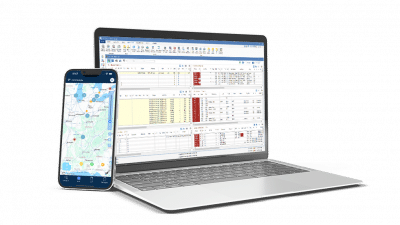
That’s how we think about Dispatch powered by Cortex, built into our TMS. It gives dispatchers the right information up front so they can make better decisions faster, with more margin and less scrambling. The dispatcher still makes the call.
What I’m taking back to my team
AI has taken over so much of our daily lives, and we’re all being challenged to figure out how it fits into our work. I’m pushing my team to use it. But AI doesn’t replace ownership. You have to put the work in to make it do the work for you, and a person still has to own the outcome.
Malcolm also talked about not losing the entrepreneur inside the enterprise, meaning the speed and ownership that built a company in the first place. I think about that with my own marketing team every day. Use the tools, but take ownership of the result.
And then there’s culture. Malcolm said it will outlast every technology stack, and I believe that. Tools change every cycle. The people and the culture are what hold a company together. As a manager, that’s what I’m leaving with: what are we building here, in my department and across PCS?
So, are you evolving?
It’s a fair question to ask yourself and your team. Malcolm’s challenge was that every company is already choosing, and the ones that move now will shape the next decade.
If you were in the room this year, thank you. If you weren’t, I’d love to see you at next year’s summit.