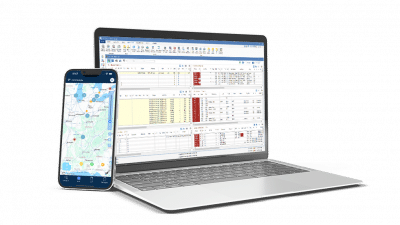
TL;DR: Mid-size shippers searching for Shipwell TMS alternatives need a platform that handles volume growth without enterprise complexity or startup limitations. Eight options are compared, starting with PCS Software, the shipper TMS built for manufacturers and distributors who need route optimization, dock scheduling, and freight audit without the six-figure implementation.
Shipwell transportation management software (TMS) alternatives exist because no platform handles every shipper’s needs the same way. But shippers looking at alternatives now run into specific problems: their current system can’t handle volume growth, carrier integrations break down under load, or they need features Shipwell hasn’t built yet.
This comparison covers eight alternatives to Shipwell, starting with PCS’ Shipper TMS Software for mid-size to enterprise shippers, then covering MercuryGate and Manhattan Active, as well as specialty solutions like project44 for visibility. Implementation quality matters more than feature lists when determining actual ROI.
Why Shippers are Evaluating Shipwell TMS Alternatives
A shipper running 2,000 shipments monthly fits comfortably inside Shipwell’s design. At 15,000 shipments, the platform strains. Rating engines slow down, carrier integrations need manual intervention, and invoice exceptions pile up faster than teams can resolve them.
Three operational problems drive most alternative searches:
Limited carrier access drives up freight costs.
A shipper tendering Chicago to Atlanta gets quotes from five carriers through Shipwell. Established platforms return 18. Those missing 13 carriers include regional specialists running that lane daily at contracted rates below spot market pricing. Newer platforms don’t have the carrier relationships older ones spent 15 years building.
Missing enterprise features force manual workarounds.
Multi-stop LTL routing with time windows requires constraint-based optimization. A shipment with pickups at three locations and deliveries at four—where Location B must precede Location D and Location E has a 10 am to 2 pm window—needs an algorithm that evaluates thousands of sequence combinations. Basic routing tools can’t solve this.
Private fleet operations need yard management, driver scheduling, and equipment maintenance integrated into dispatch. Platforms built for brokerage don’t include these workflows. The gap forces dispatchers into spreadsheets and manual coordination that shouldn’t exist.
Per-shipment pricing becomes unsustainable at scale.
At $8 per shipment, 15,000 monthly shipments cost $120,000 annually. Percentage-of-spend pricing shifts the cost structure but creates different problems when freight spend drops 30% during a downturn. The TMS cost stays proportional while volume and revenue collapse.
Eight Shipwell TMS Alternatives Compared
Rating engines, carrier integrations, and visibility architectures differ enough between platforms that your choice determines operational workflows for the next 3-5 years.
| Platform | Carrier Network Depth | Visibility Strength | Rating & Optimization | Integration (EDI/API) | Freight Audit | Best Fit For |
|---|---|---|---|---|---|---|
| PCS Software | 70+ integration partners; carrier, ERP, ELD, telematics | Real-time tracking via MacroPoint, project44, FourKites | Multi-stop route optimization with time windows | API/EDI; SAP, Oracle, Microsoft Dynamics | Full audit with GL coding + driver pay | Mid-size and enterprise shippers needing route optimization + private fleet + dock scheduling |
| FreightPOP | 1,500+ carriers across parcel, LTL, FTL, ocean, rail, air | Real-time, normalized API tracking | Multimodal rate shopping + newer route optimization | API-first + 1,500+ pre-built integrations | Full invoice audit with exception workflows | Mid-market shippers needing fast deployment + broad carrier mix |
| Project44 | 240,000+ global carriers + 99% of NA LTL + global parcel/air/ocean | Industry-leading real-time multimodal visibility | Basic rating; optimization not core strength | API-first; telematics; EDI; mobile | Included, but not the primary value | Operations needing world-class visibility paired with another TMS |
| MercuryGate (Infios) | Deep enterprise EDI carrier connectivity | Control tower visibility | Advanced “Mojo” optimization engine | Full EDI + API | Automated audit + settlement | Enterprise shippers with complex routing + multi-mode workflows |
| Manhattan Active TMS | Broad connectivity via brokers, networks, and visibility partners | Real-time with proactive alerts | High-speed multi-modal optimization core | API-first microservices; strong WMS integration | Strong settlement + procurement | High-complexity networks needing synchronized WMS/TMS |
| Descartes (GLN) | 26,000+ customers + 200,000 partners in GLN | MacroPoint global visibility | Multimodal planning, consolidation, and mode optimization | EDI/API across global protocols | Automated reconciliation | Global, compliance-heavy, multi-modal shipping environments |
| BluJay (e2open) | 40,000–50,000 carriers + 5,700 customers | Powered by project44 visibility | Multimodal planning, routing, and settlement | API/EDI + major ERP integrations | Built-in audit + payment | Large enterprises needing integrated trade + transportation |
| Kuebix (FreightWise) | 21,000+ shippers + Trimble carrier network | Real-time + predictive analytics | Multimodal rating + “freemium”-driven workflows | SaaS integrations, limited public documentation | Automated audit with GL coding | SMB to mid-market shippers wanting modular, low-barrier TMS |
PCS: Shipper TMS for Mid to Enterprise Manufacturers and Distributors
PCS is a cloud-based shipper TMS built for manufacturers and distributors who have outgrown basic platforms but don’t need (or want to pay for) enterprise complexity. The platform handles private fleets, dedicated carriers, and contract carriers from a single interface, with route optimization, dock scheduling, and yard management included, not bolted on.
Carrier network and integration quality
PCS connects to 70+ integration partners including visibility providers (MacroPoint, project44, FourKites), ELD/telematics (Samsara, Motive, Omnitracs, GeoTab), load boards (DAT, Truckstop), and ERPs (SAP, Oracle, Microsoft Dynamics, Sage, QuickBooks). The platform automates tendering to private fleet, dedicated carriers, and spot market based on cost and service requirements. Driver optimization automatically assigns loads based on location, hours-of-service, and schedules.
Shipment visibility and tracking
Real-time tracking through integrations with MacroPoint, project44, and FourKites. The platform tracks shipment location, ETA, and on-time performance across all carrier types. Automated notifications and alerts keep teams informed without manual status checks.
Rating and route optimization
Route optimization consolidates multi-stop LTL loads into fewer routes, reducing the number of trucks on the road while maximizing capacity. The platform plans routes with time windows, optimizes for fuel efficiency, and reacts to real-time exceptions. Shippers report loading more product per truck while meeting delivery windows.
EDI and API connectivity
API and EDI connections to ERPs, WMS platforms, ELD providers, and carriers. The platform integrates with SAP, Oracle, Microsoft Dynamics, Sage, and QuickBooks for seamless data flow. PCS Mobile provides automated notifications and alerts for teams away from their desks.
Freight audit and payment features
Automated matching compares invoices against pre-negotiated rates, catching duplicate payments, unauthorized charges, and rating errors. Discrepancies trigger automatic alerts. The system handles GL coding, accruals, and tolerance settings. Driver payroll integrates with in-cab telematics for accurate settlements.
Dock and yard management
Dock scheduling manages appointment bookings, dwell times, and premise times. Carriers can reserve dock times through self-service portals. Yard management tracks trailer movements, optimizes parking assignments, and controls gate processes from entry through departure. This is functionality that many TMS platforms charge extra for or don’t offer at all.
Private fleet management
Vehicle maintenance scheduling prevents downtime with proactive alerts. Dispatch optimization assigns loads to drivers based on 36+ data points. Safety and compliance tools handle Hours of Service, driver qualifications, and vehicle inspections. The platform manages dedicated fleets and contract carriers from the same interface.
Scalability
Cloud-native with an average implementation time of 3-4 months. The platform serves manufacturers (Bonnie Plants, Aurora Organic Dairy) and distributors (Wastequip). In 2025, PCS TMS earned recognition on the Capterra Shortlist for Transportation Management and was named a Software Advice FrontRunner for Logistics.
Cost
Contact PCS for pricing. A cloud-based subscription model means no hardware costs and faster implementation than on-premise alternatives.
Cortex AI: Automation that actually reduces dispatcher workload
Most TMS platforms add AI as a marketing checkbox. The feature exists, but in a separate module that dispatchers ignore because it doesn’t fit their workflow. PCS built Cortex AI directly into the screens dispatchers already use, which means the automation happens where decisions get made.
Load ranking, driver matching, and backhaul identification run continuously in the background. Tasks that used to require five clicks now take one.
| Capability | What It Does | Benefit |
|---|---|---|
| Load Opportunity Management | Captures freight from emails, documents, EDI, and load boards. Ranks loads by profitability using AI scoring. | Prioritize high-margin freight instead of processing loads first-in-first-out. |
| Dispatch powered by Cortex | Recommends optimal driver and equipment combinations using 36+ data points. One-click reserve or dispatch. | Cuts tender-to-dispatch time from hours to minutes. |
| Backhaul Booster | Identifies return legs within your network and auto-contacts shippers with offers via email or phone. | Reduces deadhead miles and increases revenue per truck. |
| Natural Language Search | Query the system in plain English: “Show loads where RPM > $3” or “Find drivers available in Dallas tomorrow.” | No filter menus or report builders required. |
| Workflow Automation | Auto-creates loads, manages documentation, and triggers driver assignments based on your rules. | Eliminates manual data entry video that eats dispatcher time. |
| Real-Time Insights | Predictive analytics flag margin risks and operational issues before they hit your P&L. | Proactive problem-solving instead of reactive firefighting. |
One customer, Voyager Express, described it as “enterprise-level tech that used to only be for the giants.”
FreightPOP: Multi-Carrier Shipping Platform
FreightPOP is a cloud-based TMS targeting mid-market and enterprise shippers. The platform connects to 1,500+ carriers and integrates with ERP, WMS, and eCommerce systems.
Carrier network size and integration quality
FreightPOP connects to 1,500+ carriers across parcel, LTL, FTL, ocean, rail, and air. The platform uses API-based integrations for carrier connectivity. Shippers can add carriers themselves in minutes through the platform, or FreightPOP can add them. The system includes negotiated rates, partner rates, and marketplace rates in rate shopping.
Shipment visibility and tracking
Real-time tracking pulls data from carrier APIs and updates shipment status from order creation through delivery. The platform normalizes tracking data across different carrier systems into one interface.
Rating and route optimization
The platform offers multimodal rate shopping, comparing rates across all transportation modes simultaneously. Recent updates added route optimization, yard management, and dock scheduling capabilities. AI rate shopping automates carrier selection based on price and service requirements.
EDI and API connectivity
FreightPOP uses API-first architecture rather than EDI. The platform offers 1,500+ pre-built integrations with ERPs (SAP, NetSuite, Oracle, Microsoft Dynamics, Acumatica, QuickBooks), WMS, CRM, and carriers. Custom integrations can be built through homegrown APIs.
Freight audit and payment features
The system audits 100% of invoices, performing a quote-to-invoice audit and freight bill review. Exception workflows flag invoice discrepancies. Automated GL coding simplifies accounting processes.
Scalability
FreightPOP customers report the platform handles up to 50,000 monthly shipments before requiring custom infrastructure work. Best fit for shippers between 5,000 and 40,000 monthly shipments.
Cost
The pricing model is not publicly disclosed. Requires vendor discussion based on shipment volumes and feature requirements.
Project44: Visibility and Tracking Focused
Project44 isn’t a true TMS, but a visibility platform you pair with another system for rating and booking. If you need to know where every shipment is at all times across all modes, Project44 does that better than anyone. If you need to book loads, you need something else.
Carrier network size and integration quality
Project44 connects to 240,000+ global truckload carriers, over 99% of North American LTL capacity, 99%+ of global parcel capacity, 200+ airfreight carriers and forwarders, and manages millions of ocean containers annually. The platform connects through telematics, API/TMS integrations, EDI, and mobile apps.
Shipment visibility and tracking
Movement by project44 provides end-to-end visibility across all modes: FTL, LTL, parcel, ocean, air, rail, and intermodal. The platform ingests data from carriers, ELD providers, telematics systems, and forwarders, then cleanses and normalizes it. Visibility extends beyond simple tracking to include door-to-door monitoring even when freight forwarders manage segments.
Rating and route optimization
Project44 recently added Rating & Booking capabilities for freight procurement, but the platform’s core strength remains visibility. Rating functions allow load building, instant carrier rates, performance benchmarking, and route selection.
EDI and API connectivity
The platform uses API-first architecture with both “hard” APIs for direct carrier integration and “soft” APIs for voice and messaging. EDI integration is available alongside the REST API option, depending on carrier capabilities.
Freight audit and payment features
Project44 added freight audit in 2024, but it’s not why you buy this platform. You buy it for visibility. The audit features exist. They’re not the reason 1,000+ brands use Project44.
Scalability
The platform tracks over 1.5 billion shipments annually for 1,000+ brands in manufacturing, automotive, retail, life sciences, food & beverage, CPG, and oil/chemical/gas industries.
Total cost
Pricing is not open on their site’s information. Contact Project44 directly for specific pricing.
MercuryGate: Enterprise TMS With Deep Functionality
MercuryGate rebranded to Infios Transportation Management, but everyone still calls it MercuryGate. Founded in 2000, it’s an enterprise TMS that runs both cloud and on-premise. The Mojo optimization engine is the reason you’d choose this over newer platforms.
Carrier network size and integration quality
The platform supports EDI and pre-built EDI connections available for carriers. The platform also integrates with SAP, Oracle, Microsoft Dynamics, and NetSuite ERPs.
Shipment visibility and tracking
Real-time visibility across all shipments with alerts and KPI tracking. Control tower visibility provides end-to-end transportation monitoring. Dedicated portals allow customers to track shipments and communicate with shippers.
Rating and route optimization
The platform includes Mojo, MercuryGate’s optimization solution. Mojo handles complex routing that newer platforms can’t touch. Multi-stop consolidation with time windows, equipment constraints, driver hours. If you’re running mixed fleets with private trucks and contract carriers across overlapping networks, Mojo solves problems basic route optimization tools won’t attempt.
EDI and API connectivity
Full EDI support with X12 and EDIFACT standards. API integrations are available for connecting with other enterprise systems. Electronic data interchange handles communications with carriers for bookings, cargo status, and estimated arrival times across all modes.
Freight audit and payment features
Automates freight audit, payment, and carrier settlement. Invoice processing includes matching carrier invoices against contracted rates. The system provides freight settlement capabilities for managing all freight types, including brokered and contract carrier freight.
Scalability
Designed for businesses of all sizes with cloud-based and on-premise options. Customers include major enterprises like Cardinal Health, Wesco, and UPS Supply Chain Solutions.
Total cost
Subscription license pricing is based on the number of users or transactions. Contact Infios for specific pricing.
Manhattan Active TMS: Supply Chain Suite Integration
Manhattan Active TMS is a cloud-native Shipwell TMS alternative built from the ground up on Manhattan’s Active technology platform using a microservices architecture.
Carrier network size and integration quality
Manhattan connects to carriers through marketplaces (Loadsmart), visibility providers (project44, FourKites, MacroPoint), and carrier networks. The real value is native integration with Manhattan Active Warehouse Management. If you’re synchronizing warehouse and transportation operations, that integration is why you’re here.
Shipment visibility and tracking
Real-time freight visibility across the entire supply chain with in-app messaging and proactive, subscription-based alerts. Unlimited visibility from the highest to the lowest level. Interactive maps and real-time details provide shipment tracking.
Rating and route optimization
Manhattan claims its optimization core delivers 80% faster solve times and 10x faster network performance than competitors. The optimization engine self-configures and self-tunes using real-time operational data to adjust parameters automatically. Accesses weather, traffic, and external data for practical planning.
EDI and API connectivity
Integrates with ERPs, WMS platforms, and e-commerce systems via APIs. Cloud-based with API-first architecture. Integration partners include Cleo Integration Cloud, Avalara, Trimble, Cybersource, and others.
Freight audit and payment features
Freight procurement capabilities included. The platform handles carrier management and freight settlement processes.
Scalability
Cloud-native microservices architecture provides automatic scalability and continuous updates. Every 90 days, all Manhattan Active solutions automatically receive new features and enhancements without requiring upgrades. Manhattan positions this for Gartner’s Level 3-5 complexity operations: synchronized warehouse and transportation networks, multi-modal planning across global operations, and real-time optimization across thousands of shipments daily.
Total cost
Subscription-based pricing model. No publicly available pricing information. The platform positions itself as a standalone TMS or as part of the unified Manhattan Active Supply Chain suite.
Descartes: Global Logistics Technology
Descartes Systems Group is a Canadian multinational that’s been acquiring logistics software since 1981. Thirty-two acquisitions since 2016 mean you’re buying into a platform that’s part organic development, part stitched-together acquired products. The Global Logistics Network ties it together.
Carrier network size and integration quality
The Descartes Global Logistics Network (GLN) connects more than 26,000 customers and 200,000 connected parties in more than 160 countries. The 2025 acquisition of 3GTMS added a network of API-integrated LTL carriers and expanded carrier reach in North America. The GLN provides electronic messaging for freight companies, manufacturers, distributors, retailers, customs brokers, and government agencies.
Shipment visibility and tracking
Descartes MacroPoint provides global, real-time freight visibility. MacroPoint shows where every shipment is right now. One portal, all modes, real-time updates. Integration with SAP Transportation Management and other systems promotes real-time shipment status tracking.
Rating and route optimization
TMS includes tools for planning, rating, consolidation, and routing covering the entire shipment lifecycle. Mode optimization selects between LTL, FTL, intermodal, and parcel based on cost, transit time, and service requirements.
EDI and API connectivity
The GLN supports multiple secure communication protocols, including HTTP(S), AS2/AS4, API, sFTP, FTPs, Webservices, and OFTP. Integration with ERPs, WMS, and back-end systems.
Freight audit and payment features
The platform automates and simplifies invoice reconciliation processes. Freight audit capabilities validate carrier invoices against contracted rates.
Total cost
Pay-as-you-use pricing model. TMS pricing varies based on the number of shipments, modalities in scope, and the level of functionalities needed.
BluJay Solutions: Full-Scale TMS and Visibility
BluJay Solutions was acquired by e2open in September 2021 for approximately $1.7 billion and originally launched in 1999 as one of the industry’s first single instance, multi-tenant, cloud-based TMS platforms.
Carrier network size and integration quality
BluJay Global Trade Network connects over 50,000 carriers and supply chain partners (some sources cite a 40,000-50,000 range). Serves over 5,700 global customers, including 20 of the top 25 global logistics service providers. BluJay uses project44 for visibility instead of building its own. You get project44’s carrier network through BluJay’s TMS interface.
Shipment visibility and tracking
Real-time tracking and visibility across the transportation network through the project44 partnership.
Rating and route optimization
Multimodal freight management supporting rating, routing, and load building. Transportation planning, execution, settlement, and procurement in one workflow.
EDI and API connectivity
SaaS platform with ERP integrations (SAP) and API connections to Loadsmart (instantly bookable rates and capacity), Cleo Integration Cloud, Convoy, and Descartes MacroPoint.
Freight audit and payment features
Freight bill auditing and payment processing capabilities. Automated carrier selection with competitive rates. Invoice reconciliation processes are built into the platform.
Scalability
Cloud-based, multi-tenant architecture supports mid-size shippers to large enterprises.
Total cost
Now part of the e2open platform. SaaS-based pricing model. For specific pricing, contact e2open.
Kuebix: Freight Intelligence Platform
Kuebix was founded in 2008, acquired by Trimble, then shut down in 2022. FreightWise bought it in 2023 and restarted operations. If you’re considering Kuebix, you’re betting on a platform that barely survived. Over 1,000 shippers stayed through the shutdown, which says something about the freemium model’s stickiness.
Carrier network size and integration quality
At the time of the Trimble acquisition, Kuebix had a network of 21,000+ shipping companies. Combined with Trimble’s 1.3 million commercial trucks in North America, it creates what was positioned as the largest connected network of shippers and carriers. As of the 2023 FreightWise acquisition, over 1,000 shippers remained active on the platform.
Shipment visibility and tracking
Cloud-based platform providing real-time tracking and visibility. Freight Intelligence capabilities with predictive analytics. Platform visibility into carrier asset availability and operational plans.
Rating and route optimization
Democratized rating, booking, and tracking through a freemium model. Multimodal freight management. Modular platform scalable to supply chains of all sizes and complexity levels.
EDI and API connectivity
SaaS platform with integrations across order management to financial settlement. Specific EDI/API partner details aren’t publicly documented.
Freight audit and payment features
Kuebix automatically audits carrier invoices against approved quotes, flags rate exceptions with specific discrepancy details, and manages payment timing based on carrier terms while integrating GL codes for accounting classification.
Scalability
Modular platform designed to scale from small shippers to enterprise level. Famous for the “Kuebix Free Shipper” freemium model that garnered 14,000+ sign-ups. Tiered offerings: Free Shipper, Business Pro, Enterprise with Premier Application, and managed service options.
Total cost
Originally offered a freemium model (Kuebix Free Shipper). Paid tiers included Business Pro and Enterprise. Public pricing is unavailable since the Trimble acquisition.
Choosing the Right Shipwell TMS Alternative: What Matters
Older systems like MercuryGate and Manhattan Active pack in capabilities but require months of training. Newer platforms like FreightPOP simplify the interface but lack advanced routing and optimization. Mid-market options like PCS Software balance functionality with faster implementation.
- Switching costs matter.
Migrating rates, carrier connections, and historical data takes 4-6 months. Team retraining adds another quarter before dispatch efficiency returns to baseline. - Match capabilities to operations.
High-volume shippers need an automated freight audit. Manufacturers need dock scheduling integrated with production lines. Companies with private fleets need driver optimization and vehicle maintenance. 3PLs need customer portals with role-based visibility. - A poorly configured TMS underperforms a basic one set up correctly.
Standard implementations ignore your carrier preferences, service requirements, and routing rules. Customer A requires FedEx for all shipments. Customer B won’t accept deliveries after 2 pm. Customer C needs signature confirmation on everything. None of that gets programmed in during standard implementation. Then six months later, your carrier mix has changed, contract rates have updated twice, and routing logic is stale. Your team starts routing around the TMS because it’s wrong more often than it’s right.
PCS configures TMS platforms to match actual operations instead of forcing shippers into default workflows.
Why Mid-Size Shippers Choose PCS Software
PCS Software built a shipper TMS for manufacturers and distributors who need more than basic platforms offer but don’t need (or can’t justify) enterprise complexity. The difference shows up in three areas:
Route optimization that actually reduces trucks on the road.
- Multi-stop LTL consolidation maximizes truck capacity
- Time window constraints get solved, not ignored
- Shippers report putting more product on fewer trucks while meeting delivery commitments
Private fleet and contract carrier management from one interface.
- Automated tendering to private fleet first, then dedicated carriers, then spot market based on your rules
- Driver optimization assigns loads based on location, hours-of-service, and schedules
- Vehicle maintenance prevents downtime before it happens
Dock scheduling and yard management included.
- Carriers book appointments through self-service portals
- Yard management tracks trailers from gate entry through departure
- Features enterprise platforms charge extra for and basic platforms don’t offer at all
Cortex AI runs underneath all of it. Load ranking, driver matching, and backhaul identification happen automatically in the background. The automation lives inside the screens your team already uses, not in a separate module they’ll ignore.
See How PCS Shipper TMS Handles Your Operations
PCS Software serves manufacturers, growers, and distributors who need route optimization, freight audit, and private fleet management without enterprise pricing or startup limitations.
We start by mapping how you actually operate. Which carriers do you use for which lanes? What service commitments did you make to customers? Do you run private fleet, dedicated carriers, or both? That goes into the system configuration before your team touches the platform.
Want to see PCS Shipper TMS handle your specific operations?
Request your personalized demo. We’ll show you route optimization with your lane data, freight audit with your carrier rates, and dock scheduling with your facility requirements.