Truck driver productivity is the single number that tells you whether your fleet is making money or burning diesel.
Picture this.
You’ve got a driver sitting in a Walmart DC parking lot outside of Bentonville at 6 AM, trailer backed into a door, paperwork handed over, and they’re watching the clock tick past two hours with nothing happening. The driver is on duty, eating into his 14-hour window.
And every minute the driver waits is a minute they’re not hauling your next load.
Now multiply that across 30 trucks, five days a week, 52 weeks a year and you’ve got a recipe for disaster.
The numbers back it up.
ATRI’s 2025 Operational Costs of Trucking report found that non-fuel operating costs hit $1.779, the highest ATRI has ever recorded. Empty miles climbed to 16.7%. Truckload carriers ran an average operating margin of negative 2.3%. In a market that tight, every hour your drivers spend on anything other than moving loaded freight is an hour you can’t afford to lose. And driver productivity doesn’t start in the cab. It starts with dispatch. How quickly drivers get their next load, how efficiently routes are planned, and how little time gets burned between drops. The dispatcher sets the ceiling for what a driver can actually produce in a day.
Below, we’ll break down what truck driver productivity actually means, which metrics matter most, what’s quietly eating your drivers’ hours, and how a transportation management system (TMS) helps you get those hours back.
Key Takeaways
- Truck driver productivity is the ratio of paid, loaded miles to total on-duty hours. Higher productivity means more loads moved per driver per day.
- Detention drained $11.5 billion in productivity from the trucking industry, and over a third of drivers have quit a job because of it.
- The biggest productivity killers aren’t on the road. They’re in the dispatch office, the accounting department, and the shipper’s loading dock.
- Tracking the right metrics (revenue per driver, empty miles, dwell time, loads per day) gives fleet managers the data to stop guessing and start fixing problems.
- An all-in-one TMS that connects dispatch, accounting, fleet management, and driver communication can recover hours per driver per week.
What Is Truck Driver Productivity?
Truck driver productivity is a measure of how efficiently a driver’s available on-duty hours convert into revenue-generating freight movement.
It accounts for driving time, loading and unloading time, wait time, administrative tasks, and any other activity that falls within the driver’s regulated HOS window. A productive outcome means the maximum possible portion of the 11 allowable driving hours is spent moving loaded freight, with minimal time lost to detention, empty miles, paperwork, or poor upstream planning.
Every driver has a fixed number of work hours every day, just like a tank of diesel. Productivity is the amount of freight moved in that tank before it runs dry. Every hour a driver sits at a dock because an appointment wasn’t confirmed, reroutes because dispatch missed a detail, or waits on hold with accounting over a settlement question is an hour that generates zero revenue. Most of those losses happen before the driver ever turns the key.
According to the ATA’s 2025 American Trucking Trends report, the industry employed 3.58 million professional drivers in 2024 and moved over 72% of the nation’s freight by weight. With the driver shortage hovering around 80,000 open positions, the math is simple. You have to get more out of the hours your drivers are already working, and that starts with the people who plan their days.
How To Measure Truck Driver Productivity
You can’t improve what you don’t track. But tracking everything buries you in data that doesn’t help. The best fleet managers focus on a short list of metrics that connect directly to profitability.
| Metric | What It Tells You | Why It Matters |
|---|---|---|
| Revenue per driver | Total revenue generated divided by total drivers | Your clearest single measure of per-driver output |
| Revenue per truck per day | How much each asset earns daily | Separates driver performance from equipment utilization |
| Loaded miles vs. empty miles | Percentage of miles driven with paying freight | Empty miles are pure cost. Target 85%+ loaded ratio |
| Average dwell time | Hours spent at shipper/receiver facilities | Directly reduces available driving hours |
| Loads per driver per week | Throughput at the individual level | Low numbers point to dispatch gaps or route problems |
| On-time delivery rate | Percentage of loads delivered within the window | Shows how well route planning, dispatch accuracy, and driver reliability work together |
| HOS utilization | Percentage of the 11-hour window actually used for driving | Low utilization points to systemic waste in your operation |
A fleet management system that integrates with your ELD provider can pull most of these numbers automatically, so you’re not asking dispatchers to build reports by hand.
What Kills Truck Driver Productivity (and What It Costs You)
Most productivity problems don’t start behind the wheel. They start in the office, at the dock, or in the gap between disconnected systems.
Detention at shipper and receiver facilities
ATRI’s data is hard to argue with. Drivers were detained for 117 to 209 hours per year, depending on their sector. That’s three to five full work weeks per year spent sitting in a parking lot waiting for a dock door to open.
The money side is worse than most realize.
Average dwell time per stop did improve year over year, but the industry is still hemorrhaging hours at the dock. When you combine that with empty miles climbing to 16.7% and truckload margins running negative 2.3%, even small amounts of wasted dock time hit harder than they did two years ago. A driver sitting at a facility for three hours burns through almost a quarter of their available driving window for the day, and that’s time you can’t bill for and can’t get back.
Driver compensation ranked as a top-five industry concern for the sixth straight year, with detention a direct contributor to the pay gap. Drivers lose thousands of dollars annually to uncompensated wait time, and the problem feeds turnover. The driver shortage has never ranked lower on the industry’s issues list, but that’s mostly because a soft freight market has reduced hiring. When volumes pick back up
Manual and disconnected dispatch processes
If your dispatcher is toggling between a spreadsheet, a load board, a phone, and a whiteboard to assign loads, you’re losing time on every single assignment. The dispatcher who spends 30 minutes matching a driver to a load by cross-referencing HOS, location, equipment type, and customer preferences by hand is one who could have moved that truck an hour ago.
Disconnected dispatch also means missed backhauls. Every time a truck runs empty on a return leg because nobody had time to search for a return load, that’s revenue left on the table. ATRI’s 2025 Operational Costs report found empty miles rose to an average of 16.7% across the industry in 2024. Automated dispatch tools that factor in driver availability, HOS, equipment, and lane history can turn a 30-minute assignment into a 30-second one.
Slow billing and settlement cycles
This one might surprise you, but accounting bottlenecks kill productivity in two ways. First, when billing takes too long, cash flow tightens, and tight cash flow means you can’t fuel trucks, pay drivers on time, or cover maintenance. Second, drivers who spend time calling the office to ask about settlement discrepancies or missing pay are drivers not focused on their next load.
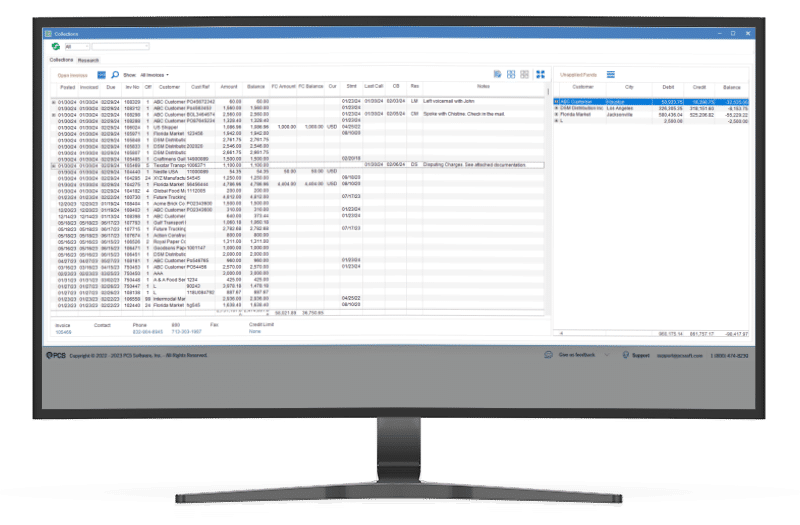
When dispatch and accounting run on separate systems, data gets entered twice, invoices get delayed, and errors pile up. Every carrier that’s grown past 20 trucks has felt this one.
Poor driver communication
Phone tag between dispatch and drivers eats hours every week. A driver who can’t get load details, updated routing, or document confirmation without calling dispatch is a driver stuck waiting for someone to pick up the phone.
A mobile app that pushes load info, documents, and two-way messaging directly to the driver’s phone eliminates the back-and-forth. The driver gets what they need when they need it, and dispatch stays focused on planning instead of fielding calls.
How a TMS Helps You Protect Driver Productivity
A transportation management system won’t fix a bad dock operation at a shipper’s facility. But it will fix every productivity problem that starts inside your four walls.
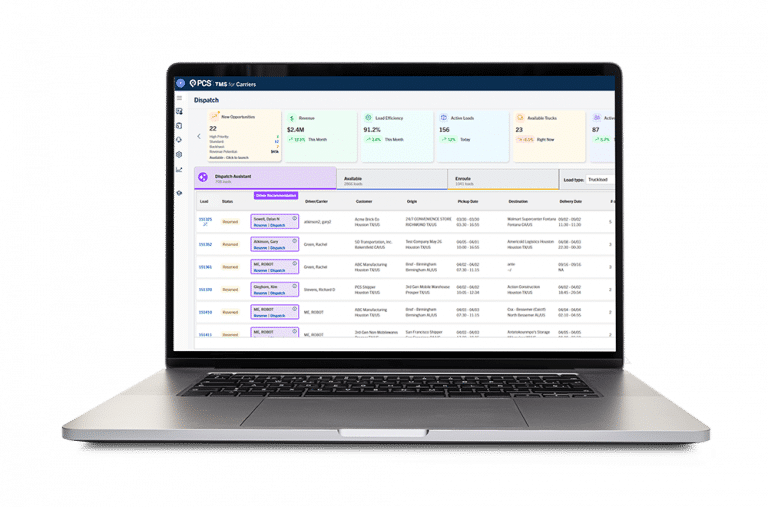
- Faster, smarter load assignments. Instead of manually matching drivers to loads, a TMS evaluates driver location, HOS remaining, equipment type, lane history, and customer preferences and recommends the best match. PCS Software’s Cortex AI uses 36+ data points to do exactly this, turning load assignment from a manual puzzle into a one-click decision.
- Automated backhaul matching. Empty return miles are one of the fastest ways to lose money. A TMS that proactively finds return loads, like PCS’s Backhaul Booster, scans your network for profitable return legs and even automates outreach to shippers to secure them. Fewer empty miles, more revenue per truck per day.
- Unified dispatch and accounting. When your dispatch and accounting live in the same system, load data flows directly into invoicing and settlement. No double entry. No waiting for someone in accounting to catch up. Billing goes out faster, drivers get paid on time, and your cash flow stays healthy.
- Real-time fleet visibility. Knowing where every truck is, what its status is, and when it’s available for the next load means your dispatchers aren’t guessing. They’re planning. Fleet management tools that integrate ELD data and GPS tracking give you the full picture without the phone calls.
- Driver self-service on mobile. When drivers can view their pay, clock in and out, submit documents with a photo, and get load details through a mobile app, you eliminate dozens of daily interruptions between driver and office. That’s less time on admin for everyone involved.
Truck Driver Productivity Benchmarks by Fleet Size
What counts as productive depends on how big your operation is and where you run.
A 15-truck carrier doing regional routes faces different constraints than an enterprise fleet hauling coast to coast. This table gives you some rough (still helpful) benchmarks.
| Benchmark | Small Fleet (1-25) | Mid-Size (26-200) | Large (200+) |
|---|---|---|---|
| Loaded mile ratio | 80-85% | 85-90% | 88-92% |
| Average dwell time | 2.5-3.5 hrs | 2.0-2.5 hrs | 1.5-2.0 hrs |
| HOS utilization | 70-75% | 75-82% | 80-87% |
| Loads/driver/week | 4-5 (regional) | 5-6 | 5-7 |
If your numbers fall below these ranges, the problem is almost always in one of the areas listed in the previous section. Detention, dispatch inefficiency, disconnected systems, or communication breakdowns. Start measuring, then start fixing.
Stop Losing Hours. Start Moving Freight.
Every carrier has the same number of hours in a day.
The difference between a profitable fleet and one scraping by comes down to how many of those hours go toward moving paying freight, and how many get swallowed by detention, bad dispatch, disconnected systems, and phone tag.
PCS Software was built by people who’ve lived this problem. The TMS puts dispatch, accounting, fleet management, and driver communication in one system so nothing falls through the cracks. Cortex AI matches drivers to loads in seconds, finds profitable backhauls automatically, and gives you the visibility to spot problems before they cost you money.
Whether you’re running 50 trucks or 500, every hour you recover per driver adds up.
Ready to see what’s eating your drivers’ hours?
Schedule a demo and find out how PCS keeps your trucks rolling and your margins growing.
FAQ
The simplest way to calculate truck driver productivity is revenue generated per driver per unit of time (day, week, or month). If you want to get more specific, divide total loaded miles driven by total on-duty hours, giving you a revenue-per-hour figure that accounts for both driving and non-driving on-duty time. You can also use this formula to get a percentage-based HOS utilization rate. Take total driving hours, divide by total on-duty hours, and multiply by 100. The closer that number is to 100%, the less time your drivers are spending on non-revenue activities.
Revenue per truck per day varies widely by sector, lane, and region. As a general target for dry van truckload operations, $800 to $1,200 per truck per day is considered solid in a stable freight market. Reefer operations trend higher due to accessorial charges. ATRI’s 2025 Operational Costs report found that the average cost of operating a truck in 2024 was $2.26 per mile, with non-fuel operating costs hitting $1.779 per mile, the highest ATRI has ever recorded. Anything you earn above your per-mile cost is margin, and that margin is directly tied to how productively your drivers use their available hours.
Low truck driver productivity usually traces back to excessive detention at shipper and receiver facilities, high empty-mile percentages from poor backhaul planning, inefficient dispatch processes that delay load assignments, driver downtime from maintenance issues, and administrative friction from disconnected systems. ATRI’s research found that detention alone drained $11.5 billion in productivity from the industry, with individual drivers losing $11,000 to $19,000 per year in revenue they could have earned on the road.
Yes. A TMS that integrates dispatch, fleet management, accounting, and driver communication reduces the time spent on manual tasks across the entire operation. Automated load matching speeds up assignments, real-time tracking reduces phone calls between dispatch and drivers, and integrated accounting cuts out the duplicate data entry that slows billing cycles. All of that adds up to more available hours for paid miles per driver per day.