There’s a problem quietly spreading across mid-market carriers right now. Trucks are moving. Load boards are covered. Dispatchers are working hard. And yet, margins keep shrinking.
If that sounds familiar, the issue probably isn’t effort. It’s how freight decisions are being made — and what data is available when they happen.
This is the core fleet profitability problem of 2025 and 2026. And utilization metrics alone won’t help you solve it.
The Metric That’s Misleading You
For years, utilization was the right thing to optimize. Keep trucks loaded, cut empty miles, protect on-time performance. In a market where volume covered imperfect decisions, that logic held up.
It doesn’t anymore.
The American Transportation Research Institute (ATRI) reported average operating costs of $2.26 per mile in 2024 — the highest non-fuel cost level ever recorded. At the same time, freight rates have remained uneven, with Cass reporting shipments down year over year while costs continued climbing.
When margins are compressed that tightly, small dispatch decisions compound fast. A few weak load choices per week, across a 50- or 100-truck fleet, can quietly erase margin before the end of the month.
The problem is that utilization only tells you how much work the fleet is doing. It doesn’t tell you which loads are actually generating profit — or which ones are draining it.
Utilization is a motion metric. Fleet profitability requires a margin metric.
Why Freight Margin Management Is Harder Than It Looks
Most carriers can tell you revenue per load. Far fewer can tell you margin per load — in a way that’s actionable at the moment a dispatcher needs to make a decision.
That’s not a people problem. It’s a visibility problem.
Dispatch teams are expected to evaluate more freight opportunities than ever, move faster, and make tighter calls — all while working across emails, load boards, and disconnected systems. Without real-time margin visibility, even experienced dispatchers end up defaulting to speed and availability over profitability.
The result is what operators often describe as “busy but broke.” The fleet looks strong on a traditional scorecard. Revenue is moving. Trucks are covered. But the P&L doesn’t reflect it.
Here’s why freight margin management breaks down in practice:
- Loads are accepted based on rate, not true contribution margin
- Deadhead and repositioning costs are treated as background noise instead of part of load economics
- Dispatch decisions are made in isolation rather than in network context
- The cost of a “good enough” decision compounds across dozens of loads each week
A load can look acceptable in isolation and still be the wrong call for the network.
What Margin-First Dispatch Actually Looks Like
The carriers improving fleet profitability right now have made one operational shift: they treat every dispatch decision as a financial decision.
That means asking different questions before a load gets covered:
- What is the true margin on this load after deadhead and repositioning costs?
- Does accepting this load put the truck in a stronger or weaker position for the next move?
- Is this the best use of this capacity today — or just the fastest option available?
When the question changes, the decision changes. When decisions change consistently across a fleet, the P&L reflects it.
This also changes how dispatch performance gets measured. Instead of tracking speed and utilization alone, margin-first fleets measure:
- Margin per load
- Margin by lane and by customer
- Deadhead as a percentage of total miles
- Acceptance rate of high-fit versus low-fit freight
When you change the scorecard, behavior follows.
Why Mid-Market Fleets Feel This First
This margin pressure hits mid-sized carriers hardest. Large enterprise fleets have dedicated analytics teams built for network profitability. Smaller fleets manage closely by instinct. Mid-market carriers — running 25 to 500 trucks — sit in the middle, where decision mistakes compound quickly and margins have little room to absorb them.
In today’s freight environment, that gap isn’t manageable. It’s a liability.
- You can be busy every day—but if you’re not managing how you run the operation, it won’t show up in your margins.

Moe Saleh
CEO, Greatway
Transportation Inc.

Where Technology Closes the Gap
The good news: fleets no longer have to rely on instinct alone.
Modern TMS platforms with embedded AI can surface margin data at the moment a decision is being made — not after the fact. That’s the difference between a system that records what happened and one that helps you decide what to do next.
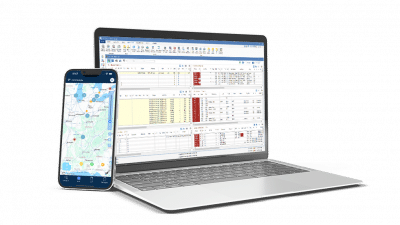
PCS TMS with Cortex AI brings freight margin management directly into the dispatch workflow. Dispatchers can evaluate available loads, apply profitability rules, and prioritize freight based on real cost and network context — without adding complexity or slowing down operations.
That means:
- Capturing and ranking more freight opportunities without manual work
- Applying margin logic across every load decision in real time
- Reducing deadhead through smarter load-to-truck matching
- Giving leadership clear visibility into which lanes, customers, and decisions are driving profit
The goal isn’t to replace dispatcher judgment. It’s to give dispatchers better information at the moment it matters most.
Start With a 30-Day Margin Review
Knowing there’s a visibility problem and knowing where it lives in your operation are two different things.
The guide includes a structured 30-day margin review — a specific set of questions fleet leaders can run against their own completed loads to find exactly where margin is leaking. It moves you from suspicion to specifics, fast.
If you’re running 25+ trucks and your P&L isn’t reflecting the effort your team is putting in, that review alone is worth the download.
Want the full framework?
Download Busy But Not Profitable? A Fleet Owner’s Guide to Margin-first Operations — a free guide built for carriers who are serious about protecting margin in today’s market.