The freight market didn’t slow down and then recover. It restructured.
According to ATRI’s July 2025 Operational Costs of Trucking report, the average truckload carrier ran a -2.3% operating margin in 2024. Total operating costs hit $2.260 per mile. Non-fuel costs rose to a record $1.779 per mile, up 3.6% year over year. Truck and trailer payments climbed to a record $0.390 per mile, up 8.3%.
Load scoring is a systematic method for evaluating freight profitability before acceptance, using a defined set of variables applied consistently across every load. Instead of accepting freight based on how it looks in the broker’s rate confirmation, load scoring ranks opportunities by true margin so dispatchers see the best loads first and decline the ones that erode profitability.
In a market where the average carrier is losing money on every mile driven, accepting loads by rate sheet alone is margin destruction at scale. This guide breaks down what load scoring actually measures, which variables most dispatchers skip, and how to evaluate freight profitability before the truck commits.
TL;DR: Rate per mile on loaded miles is a starting point, not a profitability score. With truckload carriers averaging -2.3% operating margin in 2024, accepting freight based on broker-quoted RPM alone means making accept/decline decisions without the data those decisions require. Load scoring applies total-mile rate, deadhead cost, destination market quality, dwell risk, HOS constraints, and lane fit to every opportunity before the truck rolls.
Key Takeaways:
- Loaded RPM and rate per total mile (loaded plus deadhead) can diverge by $0.30 or more per load, and most dispatchers only see the first number
- The industry average of 16.7% empty miles costs roughly $18,870 per truck per year in unreturned overhead
- Carriers operating in dense, repeatable freight networks are 20–25% more profitable than those running scattered lanes
- Automated load scoring applies the carrier’s own cost model at the moment of acceptance, not in the month-end P&L
Table of contents
- What load scoring actually means
- The variables that determine load profitability
- Why most carriers can’t act on what they know
- Building a baseline scoring approach
- How Load Opportunity Manager applies scoring inside the dispatch workflow
- Frequently asked questions about load scoring and freight profitability
What load scoring actually means
The default approach at most mid-market carriers: dispatchers evaluate loads in the order they arrive, using the loaded rate per mile as the primary signal. If the rate looks acceptable, the truck gets assigned.
Loaded RPM tells you what the shipper pays per mile the truck carries freight. It tells you nothing about how many miles the driver runs empty to reach the pickup, what the freight market looks like at the destination, how long the truck sits waiting to load or unload, or whether the driver has the HOS hours to complete the run legally.
A load that shows $2.10/mile on the rate confirmation can net out below $1.70/mile once those variables are counted. A load at $1.85/mile with zero deadhead, clean destination reloads, and a driver already in position can outperform it by a wide margin.
Load scoring makes that calculation visible at the moment of acceptance. Every incoming freight opportunity gets ranked against the carrier’s actual cost structure, so dispatchers see the highest-margin loads first rather than the most recently arrived.
The variables that determine load profitability
Rate per total mile: the number that actually matters
Loaded RPM measures revenue per mile the truck carries freight. Rate per total mile (revenue divided by loaded miles plus deadhead miles) measures revenue per mile the truck moves at all.
These numbers diverge the moment a driver runs empty to a pickup. A load paying $2.00/loaded mile with 100 miles of deadhead on a 400-mile run generates $1.60/total mile. That $0.40 gap is the margin leak most rate-sheet evaluations miss entirely.
Deadhead: the cost you’re already absorbing
ATRI’s 2025 data shows the industry average empty mile rate at 16.7%. On a truck running 50,000 miles per year, that’s 8,350 unpaid miles. At $2.26/mile in operating costs, that’s roughly $18,870 per truck per year in overhead that earns no revenue.
A load that forces 200 miles of repositioning doesn’t just add cost. It consumes driver hours and shrinks the truck’s available run time for the next load, so the deadhead penalty compounds across two loads instead of one. Repositioning can add $0.20 or more per mile to effective cost on the load that triggered it.
Destination market quality
Where the truck ends up matters as much as where it starts. A high-paying load into a thin reload market leaves the driver repositioning empty to find the next freight, and that repositioning cost comes directly out of the margin the inbound load generated.
Carriers that evaluate destination reload availability before accepting a load are protecting the profitability of the next two or three loads in the sequence. A single load into a dead-end market can wipe out the margin advantage of a rate that looked strong on the confirmation. Checking outbound volume and rate data at the destination takes minutes but prevents days of margin erosion.
Dwell time, detention risk, and HOS
Hours sitting at a shipper or receiver dock are hours not generating revenue. Loads with a history of extended dwell consume driver hours that could move freight instead. Because the 14-hour on-duty window doesn’t pause during breaks or detention, a load that takes eight hours including three hours of dwell is an eight-hour commitment against the clock.
That compounds with HOS constraints on dispatch. A driver with five hours left on their 11-hour driving limit can’t complete a six-hour run. A dispatcher evaluating loads by rate alone won’t see that conflict until the assignment fails and forces an expensive mid-route swap. Matching load duration to actual available hours (pulled from live ELD data, not a morning status call) prevents the deadhead repositioning that follows when a driver runs out of hours short of delivery.
Fleets that track detention patterns by shipper and receiver build a dwell risk profile into their scoring. A facility that averages four hours of detention on what should be a two-hour appointment turns a profitable load into a marginal one once the HOS impact is factored in.
Lane repeatability and network fit
KSM Transport Advisors found that carriers operating in dense, repeatable freight networks are typically 20–25% more profitable than those running scattered, out-of-footprint lanes. A 100-truck Midwest carrier that eliminated non-repeatable lanes from its book saw a 9% margin improvement within 90 days.
A truck that runs the same lane repeatedly generates predictable reload opportunities, reduces empty repositioning, and builds the shipper relationships that support direct rate negotiation. A load that doesn’t reinforce a core lane erodes network density even when the rate looks acceptable in isolation, because it pulls a truck out of a profitable cycle and drops it somewhere without a natural next load.
Lane fit doesn’t appear on a rate confirmation. It has to be built into the scoring model as a weighted variable alongside rate and deadhead.
Why most carriers can’t act on what they know
The strategic frameworks for load profitability are well-documented. Financial advisors build lane scorecards, calculate operating ratios by customer, and recommend threshold-based load rejection. The logic is sound.
A 75-truck fleet doesn’t have a planning team to maintain those models. Dispatchers managing 30 or 40 active trucks don’t have time to run a six-variable calculation on every incoming load while the broker waits on the phone. The math takes longer than the decision window allows.
The gap is between knowing what to measure and having that measurement visible at the moment a load appears in the queue. Manual scoring models work in quarterly reviews. They break down in the dispatch workflow where decisions happen in minutes and margin gets made or lost before anyone opens a spreadsheet.
Building a baseline scoring approach
For carriers who want to apply load scoring before implementing automated tooling, the framework starts with four steps:
| Step | What to do | Why it matters |
|---|---|---|
| Calculate breakeven rate per total mile | Take total operating cost per mile and divide by total miles driven, including deadhead | This is your floor. Any load below it generates negative margin before overhead allocation |
| Set a minimum margin threshold | Define what margin you need to stay solvent and apply it to every load consistently | Carriers running 3–5% net margin can’t accept loads at breakeven and hope volume makes it up |
| Score destination reload quality | Evaluate whether the destination market generates consistent outbound freight at acceptable rates | Internal lane history is the most accurate source. Load board data at the destination gives a real-time signal |
| Apply lane history to customer scoring | Calculate customer-level operating ratio: revenue minus fully loaded costs per customer | Separates the customers who build margin from the ones who erode it load after load |
The before/after comparison makes the case clearly. Two loads at $2.10/loaded mile look identical on the rate sheet. Load A requires 180 miles of deadhead to pickup and drops in a thin reload market. Load B has the driver in position 30 miles from the pickup and delivers to a market with strong outbound freight. Load A’s effective rate per total mile is closer to $1.70. Load B’s is close to $2.00. Accepting Load A because it arrived in the queue first costs real margin on that load and damages positioning for the next one.
How Load Opportunity Manager applies scoring inside the dispatch workflow
Manual scoring works in planning meetings. It breaks down when a dispatcher has 40 trucks in motion and a broker on the phone. The real constraint isn’t knowing what to measure. It’s applying that measurement consistently, on every load, under time pressure, without slowing down the dispatch cadence.
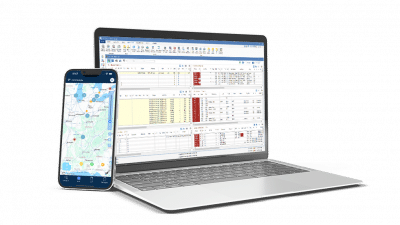
PCS Load Opportunity Manager, powered by Cortex AI, closes that gap. It captures every inbound freight opportunity from broker emails, EDI feeds, and load boards into a single hub, then scores each one against the carrier’s own profitability rules before the dispatcher touches it. Margin targets, equipment fit, lane preferences, reload potential, and customer priority all feed into the ranking through a custom rule engine that reflects how the carrier actually makes money. The highest-scoring opportunities surface first, so the dispatcher’s default action is to work the best margin loads rather than the most recent arrivals.
Because PCS runs dispatch, accounting, and fleet data in one system, Load Opportunity Manager draws on live cost data rather than last month’s averages. Driver location, HOS status, lane history, and equipment availability all feed into the evaluation through the same 36 data points that power Cortex’s driver matching recommendations. Dispatchers can also skip the filters entirely and use natural language search to find what they need (“show me flatbed loads over $3 RPM near Dallas”). When the right load surfaces, one click converts it from opportunity to dispatch-ready freight. No separate analytics screen. No manual calculation. The profitability context is already attached to the load inside the dispatch workflow before the assignment is made.
For carriers running loads that dead-end in thin markets, Backhaul Booster takes the scoring a step further. It automatically finds profitable return legs and reaches out to shippers via email or AI voice call before the truck goes empty, turning what would be deadhead into revenue without adding work to the dispatcher’s queue.
Carriers who want to see how profitability data flows from load acceptance through settlement can explore PCS reporting and analytics. The dispatch automation guide covers the full AI-assisted dispatch workflow.
Related resources
- Dispatch Automation for Trucking: Complete Guide
- Best Trucking Dispatch Software: 8 Platforms Compared
- The Benefits of a Fleet Management System
The carriers managing through this freight market aren’t running more loads. They’re running better ones. They apply profitability scoring to every incoming opportunity and decline the freight that doesn’t meet their margin threshold, even when the truck could technically run it. Every load accepted below the margin floor accelerates the -2.3% industry average in the wrong direction. Load scoring is how carriers stop guessing and start choosing.
See how PCS Load Opportunity Manager scores and ranks freight inside your dispatch workflow. Request a demo.
Frequently asked questions about load scoring and freight profitability
A: A rate sheet shows what shippers are paying on a lane. Load scoring applies your actual cost structure (including deadhead, dwell risk, destination reload quality, and driver hours consumed) to determine whether a specific load generates margin for your fleet. Two loads at identical rates can produce very different profitability once those variables are factored in.
A: Yes, but manually. Start by calculating your breakeven rate per total mile, set a minimum margin threshold, and evaluate destination reload quality before accepting loads. The framework works in planning sessions. The constraint is applying it consistently under real-time dispatch pressure, which is where PCS Load Opportunity Manager closes the gap.
A: Both cost the same per mile to operate. The difference is visibility. Deadhead to pickup is a known cost at the moment of load acceptance and should factor into the accept/decline decision. Deadhead after delivery depends on the destination market, which is why scoring reload quality before committing to the outbound load matters.
A: That load may generate positive margin in isolation but erode network density over time. A truck diverted to a non-repeatable lane loses its position in the core network, forcing empty repositioning on the return. Carriers with dense networks are 20–25% more profitable because they avoid this pattern consistently.
A: One 100-truck Midwest carrier that eliminated non-repeatable lanes from its book saw a 9% margin improvement within 90 days. The speed of results depends on how many unprofitable loads are currently being accepted. Carriers with high deadhead percentages and scattered lane patterns typically see the fastest improvement.
A: Load Opportunity Manager scoring applies across the freight types PCS supports, including TL, LTL, and intermodal. The scoring variables adjust based on the operational characteristics of each mode, but the principle is the same: evaluate profitability before acceptance using the carrier’s own cost model.
Related Guide