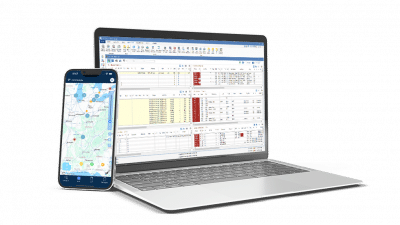
The best fleet management software helps carriers and brokers keep their trucks productive, ensuring every mile yields a return. It connects several different parts of your team’s system: dispatch, routing, accounting, maintenance, and compliance. Artificial intelligence is pushing that system even further.
One of the largest setbacks for fleets is a loss in efficiency. It’s all of the small areas that add up to bigger issues. A missed update or trucks waiting for assignments gradually begin to form a pattern that translates into revenue loss. The best fleet management software that also uses AI helps to avoid those issues on a foundational level.
In this post, you’ll learn what makes the best fleet management software effective, which features deliver the most value, and how AI is reshaping daily operations for carriers and brokers.
What Makes Fleet Management Software Effective for Carriers and Brokers?
You want your fleet management software to keep every part of your operation visible and connected. Dispatch, billing, routing, and maintenance should run through one system that updates in real time. The ultimate goal is to have everyone work from the same live data, instead of checking multiple programs or chasing information between teams.
Use this quick overview as a preliminary checklist when vetting the best fleet management software for your fleet:
- See every truck in real time: View location, route progress, and load status without phone calls or manual updates.
- Plan routes that earn more per mile: Use live data and historical performance to build lanes that improve utilization and reduce wasted fuel.
- Automate the work that slows teams down: Replace manual billing, document uploads, and driver communication with connected workflows.
- Prevent downtime before it starts: Track mileage, service schedules, and maintenance costs in one view to avoid expensive repairs.
- Keep compliance and safety on track: Integrate electronic logging device (ELD) data to monitor hours of service, inspections, and driver performance.
- Turn data into daily decisions: Access live reports on revenue, cost per mile, and asset utilization without waiting for manual input.
The best fleet management software is defined by how well it keeps the operation moving.
Essential Fleet Management Software Features That Improve Operations
The best fleet management software should make every part of a fleet easier to control.
It connects the data behind dispatch, drivers, billing, and maintenance, so the entire operation runs smoothly with unified data. Your fleet’s efficiency comes from how well each of these features works together in daily use.
The breakdown below shows the capabilities that actually move performance metrics and how AI applies them in real operations:
| Feature | Operational Value | How AI Enhances It |
|---|---|---|
| Real-time visibility | Dispatch can react instantly to changes in location, speed, and dwell time. No waiting on manual check-ins or delayed reports. | AI processes live GPS, ELD, and telematics data at once, flagging anomalies like idling or off-route movement before they cause schedule issues. |
| Route and load optimization | Reduces empty miles, fuel costs, and driver idle time while improving asset utilization. | AI compares live traffic, lane history, and driver status to predict the most efficient load pairings and route adjustments in real time. |
| Driver compliance management | Prevents fines and downtime by keeping hours-of-service and inspection records accurate. | AI tracks ELD data continuously, detecting potential violations early and alerting dispatch before they occur. |
| Automated billing | Converts completed loads into revenue quickly and reduces human error. | AI verifies proof-of-delivery records and validates rate data automatically before sending invoices. |
| Maintenance tracking | Predicts service needs before breakdowns occur, extending asset life and lowering repair costs. | AI studies mileage, engine hours, and service patterns to forecast maintenance windows and prioritize high-risk assets. |
| Operational intelligence | Replaces static reporting with live recommendations that keep fleets profitable and responsive. | AI analyzes route, cost, and performance data in real time to identify waste and surface decisions that improve margin and uptime. |
The best fleet management software replaces manual work with live data and automation that operates in the background. AI should strengthen your fleet’s foundation by spotting what people inefficiencies are, and surfacing the right action at the right time.
Together, these features give fleets a system that runs more predictably.
Top Fleet Management Software Platforms Compared
Finding the best fleet management software depends on how complex your operation is and how much data you need to manage. Every platform claims to prioritize automation, but few handle the scale, accuracy, and speed real fleets require.
Below are several leading fleet management systems trusted by carriers and brokers of different sizes, along with what each does best.
PCS Software: Best for fleets ready to connect every operation
PCS brings dispatch, accounting, and fleet management into one connected system. It’s built for carriers and brokers that have outgrown spreadsheets or standalone tools and need a central platform that scales. Cortex AI, embedded in the platform, turns dispatch and telematics data into live recommendations for routes, billing, and maintenance scheduling.
Why fleets choose it:
- Unified dispatch, routing, accounting, and maintenance workflows
- AI-backed route optimization and backhaul matching
- Real-time visibility across trucks, drivers, and costs
- Proven scalability for both asset and non-asset operations
Motive: Best for fleets focused on safety and telematics
Motive is known for its connected hardware that feeds real-time data into its cloud platform. It gives safety and compliance teams a strong base for monitoring driver behavior and vehicle performance.
Why fleets choose it:
- Reliable ELD and camera integration for driver monitoring
- Simple mobile interface and driver-friendly workflows
- Advanced telematics and engine diagnostics for maintenance planning
Considerations:
- Strong on compliance and safety, but lacks built-in accounting and load management tools
Samsara: Best for visibility and real-time fleet insights
Samsara’s strength lies in its ability to give fleets a live operational picture. Its sensors, GPS tracking, and reporting dashboards deliver real-time insight into asset use, fuel consumption, and driver performance.
Why fleets choose it:
- End-to-end visibility from vehicle location to fuel efficiency
- Intuitive reporting tools for fleet, route, and driver analytics
- Simple integration with maintenance and compliance systems
Considerations:
- Focused more on data visibility than deep TMS workflow automation
Trimble (TMW Suite): Best for enterprise carriers with complex needs
Trimble’s platform combines fleet telematics, route optimization, and asset management for large-scale carriers. It’s built for multi-division operations that need deep configuration and long-term stability.
Why fleets choose it:
- Strong optimization and capacity management tools
- Full visibility into driver hours, fuel, and maintenance data
- Long-standing industry reputation for enterprise support
Considerations:
- Longer implementation timeline and higher total cost of ownership
Rose Rocket: Best for collaboration between carriers and brokers
Rose Rocket focuses on communication across the transportation network. Its cloud-based TMS simplifies collaboration between carriers, brokers, and customers through integrated portals and shared visibility.
Why fleets choose it:
- Real-time collaboration between all partners in the supply chain
- Easy integration with ELDs, accounting tools, and load boards
- Fast onboarding and clean, modern interface
Considerations:
- Less robust in advanced accounting and compliance functions for large carriers
Each of these systems supports fleet operations in different ways. What sets PCS apart is how it unifies those capabilities in one platform designed for scalability.
Why the Best Fleet Management Software Outperforms Standalone Tools
Standalone tools create more work than they save. A GPS tracker shows location, but can’t manage billing or a maintenance program schedules services, and doesn’t connect to dispatch. Each system works alone, forcing teams to move data by hand and correct errors later.
The best fleet management software connects every part of the operation, so information moves automatically between departments.
Here are the benefits of an integrated TMS:
- Faster updates mean that when dispatch changes a route, accounting and compliance see it immediately and stay aligned.
- Fewer errors come from using a single data source instead of re-entering details across different systems.
- Accurate reporting gives leaders live dashboards that refresh automatically with the latest numbers.
- Better coordination keeps every team working from the same information, reducing delays and confusion across the board.
When one system manages planning, routing, billing, and maintenance, fleets gain the visibility and speed that disconnected tools can’t provide.
PCS TMS brings those functions together in a single connected platform, giving carriers and brokers a faster, more accurate way to manage every mile.
How PCS TMS Compares to the Best Fleet Management Software
Many fleet platforms describe themselves as management systems, but only deliver partial functionality. Some handle telematics data, others focus on maintenance, but few provide full integration from dispatch to accounting.
PCS TMS unifies the entire operation under one login. Cortex AI automates the repetitive analysis that consumes hours of manual work in other tools.
This is an overview of PCS TMS as one of the best fleet management software programs:
- Unified Dispatch and Routing: Dispatchers plan routes and assign loads from one screen. AI recommendations show the most profitable pairings, while live visibility keeps teams informed at every stop.
- Built-In Accounting: Accounting lives inside the same platform as operations. That connection means you can track invoices, fuel costs, and revenue by truck without juggling spreadsheets or exporting data.
- Real-Time Fleet Tracking: Telematics and ELD integrations give you minute-by-minute location data. You’ll know exactly when a truck departs, stops, and arrives, complete with automated alerts for dwell time, detentions, or missed checkpoints.
- Driver Communication and Mobile Tools: PCS Mobile connects drivers and dispatch in real time.
- Maintenance and Compliance: Automated service reminders and compliance alerts keep your fleet inspection-ready. All maintenance records and inspection data are stored in one searchable system.
- AI Built into the Core: Cortex AI processes live data continuously, surfacing profit-driven insights that help you plan, dispatch, and bill smarter. It learns from every trip, improving recommendations with each use.
Run Your Fleet on the Best Fleet Management Software with PCS TMS
The best fleet management software connects every part of your operation so the entire system moves as one.
PCS TMS was built for that level of control. It uses AI to plan smarter routes, reduce idle time, and eliminate duplicate work between departments. The result is a faster, cleaner operation that improves profit per mile without adding overhead.
Ready to see the difference a unified system makes?
Schedule a one-on-one demo to learn how PCS TMS helps carriers and brokers increase efficiency and keep trucks earning every day.
FAQ
Start by matching the platform to your operation’s size and complexity. The best fleet management software connects your entire fleet so every department works from the same data. It should scale as your business grows, giving you the same visibility with ten trucks or a thousand.
Tracking tools show location data. The best fleet management software ties that information to cost, load status, and driver performance. It helps managers measure any type of efficiency. This helps managers predict issues and improve margins.
AI helps fleets act faster and more accurately. It studies live route, driver, and maintenance data to suggest load pairings, highlight empty miles, and forecast service needs. Over time, those insights shorten planning cycles and reduce manual work for dispatch and accounting.
Fleets typically see a variety of benefits after switching: shorter billing cycles, fewer data entry errors, and stronger driver utilization. The goal is to have automation replace repetitive tasks and for dashboards to reduce communication delays. This type of integrated reporting provides an accurate picture of profitability and asset health.
Yes. The best systems are designed for hybrid operations, combining carrier dispatch with brokerage management under one login. This allows fleets to manage owned equipment, partner carriers, and customer freight from the same environment without losing visibility.
PCS integrates dispatch, billing, compliance, and maintenance into one connected platform powered by AI. Then, fleets use it to eliminate duplicate tools, keep revenue data live, and maintain complete control of cost per mile. The result is a leaner operation that scales as demand increases.