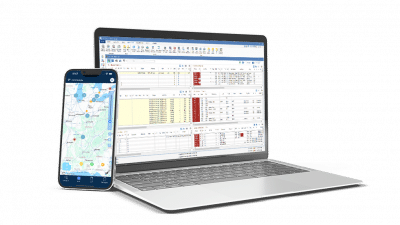
For mid-market carriers, “truck load optimization” means dispatch-layer decisions: which loads to accept, which driver to assign, and how to reduce empty miles. These three decisions compound across the week. Get them right and margins improve load by load. Get them wrong and one inefficient chain costs thousands.
What’s Costing Mid-Market Carriers Margin Right Now?
Freight rates have been inverted for three and a half years. DAT’s 2026 Freight Focus confirms spot rates have run below contract since mid-2022, and projections for this year show modest recovery at best. Rate tailwinds aren’t coming to rescue anyone’s P&L. The carriers improving margins in 2026 are doing it by extracting more from every load, not by waiting for a market rebound that keeps not arriving.
Empty miles are a structural cost most fleets aren’t managing. Industry data puts empty truck miles at 16.7% to over 20% of total miles driven. For a 100-truck fleet averaging 2,500 miles per truck per week, that’s 42,000 to 50,000 unproductive miles. Every week, those miles burn fuel, driver hours, and fixed equipment costs. Meanwhile, dispatchers at mid-market fleets cap around 40 to 42 active trucks because manual load-matching eats 20 to 30 minutes per assignment. The toolset is the ceiling. Freight availability rarely is.
Is Truck Load Optimization About the Trailer or the Dispatch Board?
Most content ranking for “truck load optimization software” is written for shippers and manufacturers. It covers cargo arrangement inside the trailer: 3D pallet visualization, weight distribution, axle compliance. That’s a real operational problem, but it belongs on the shipper’s side of the dock.
For a carrier running 25 to 300 trucks on over-the-road lanes, the optimization problem sits at the dispatch layer:
- Which loads to accept based on margin
- Which driver to assign based on live HOS and location data
- Whether the truck earns anything on the return leg
That’s what this article covers. For a deeper look at how dispatch automation works in carrier operations, start there.
What Are the Three Dispatch Decisions That Make or Break Load Profitability?
Every load touches three compounding decisions. Get all three right and margin improves across the week. Get them wrong in sequence and one bad load chain defines your dispatcher’s Friday.
How Do Carriers Decide Which Loads Are Worth Accepting?
Rate per mile doesn’t equal profitability. The real math extends beyond RPM. A $3.50 RPM load requiring 200 miles of deadhead to pickup burns roughly $340 in fuel and driver pay before the truck even picks up. Net that out and a $2.80 RPM load with no deadhead often puts more money on the settlement. Accessorial risk compounds the gap: detention averaging 2 to 3 hours per occurrence, extra stops, and where the truck ends up after delivery relative to available return freight all factor in. Most dispatchers know this intuitively. The problem is doing the math fast enough to act on it when three loads hit the board in the same 10-minute window.
Without a profitability score on each opportunity, dispatchers default to availability. Loads get accepted as they arrive rather than ranked by margin. Low-margin freight fills capacity that a better load arriving 20 minutes later could have used. AI freight scoring reorders that queue before the dispatcher sees it, ranking each load against the carrier’s own cost model so load acceptance becomes a margin decision rather than a scheduling one.
How Does Driver Assignment Affect Per-Load Profitability?
The driver-load match is where dispatch time either scales or breaks. A dispatcher manually matching location, HOS, equipment, customer needs, and lane suitability for 50 trucks is running five-variable math under constant time pressure. At 40 to 42 trucks, that math becomes the ceiling on fleet utilization. The fleet has capacity. The dispatcher doesn’t have minutes.
HOS compliance is a precondition, not a post-assignment check. FMCSA’s 11-hour driving limit and 14-hour on-duty window both need verification before a driver gets assigned. The 14-hour window is the one dispatchers miscalculate most often because it doesn’t pause during breaks. A driver who took a two-hour lunch is still two hours closer to the end of the on-duty window. Automated dispatch systems that check both limits at assignment time catch violations a manual board catches late or misses entirely.
ELD integration surfaces real availability. A TMS pulling live ELD data knows whether a driver can legally complete a 6-hour run before the dispatcher commits. Without that feed, HOS checks rely on manually updated driver status, which is always a step behind what’s actually happening on the road.
What’s the Real Cost of Running Empty on the Return Leg?
Deadhead averages 16.7% to over 20% of total truck miles, and the cost goes well beyond fuel. An empty return means driver pay for those hours, fixed equipment costs per mile, and revenue the truck could have generated. For a carrier running 100 trucks on 500-mile average lanes, cutting deadhead by 5 percentage points recaptures revenue on hundreds of loads annually. At an average revenue of $2.50 per loaded mile, that’s tens of thousands of dollars per quarter compounding across the fleet.
Backhaul sourcing is reactive by default, and reactive means empty. The traditional process starts after delivery: identify return freight, contact shippers, negotiate rates, confirm pickup. By the time that sequence completes, the best return loads on the lane were committed hours earlier. The window that matters is during the outbound load, not after it. Proactive backhaul automation closes that gap by sourcing return legs while the truck is still running its outbound route and reaching out to shippers before the driver needs to move.
How Does AI-Powered TMS Software Handle All Three Decisions at Once?
PCS has been building software for carriers since 1996. Cortex AI is the product of that 30-year operational history, embedded natively into the TMS rather than layered on as a third-party add-on. Here’s how it maps to the three decisions:
- Freight scoring before load acceptance. PCS Cortex AI ingests inbound loads from emails, EDI feeds, and load boards, then ranks each against your carrier’s own cost model: RPM adjusted for deadhead to pickup, accessorial risk, lane positioning, and where the truck ends up relative to your next likely load. Your dispatcher sees a profitability score on every opportunity as it arrives, inside the dispatch workflow. The best freight rises to the top before anyone picks up the phone.
- Driver recommendations from 36 data points. When a load is ready to assign, Cortex analyzes driver HOS status (both the 11-hour driving limit and the 14-hour on-duty window), current GPS location, equipment type, lane history, and customer restrictions simultaneously. One recommendation surfaces. The dispatcher reviews it and clicks to confirm. Assignment time drops from 20 minutes to under a minute because ELD data feeds directly into the recommendation. No separate sync. No manual status update.
- Backhaul Booster: automated return-leg outreach. Cortex identifies the most profitable return leg for each outbound load and contacts shippers automatically by email or AI voice call before the truck goes empty. The dispatcher doesn’t initiate the search. It runs in the background while the driver is still running the outbound route.
- Single-database architecture keeps recommendations current. Dispatch, accounting, fleet management, and driver settlement share one database in PCS. Cortex draws on live operational data rather than a reporting layer that syncs on a schedule. When operational conditions change (construction delays, shifted load appointments), the system recalculates from current data rather than a cached snapshot.
What Results Have Mid-Market Carriers Seen from Load Optimization Software?
Royal Logistics (100 trucks, 240 trailers): backhaul sourcing dropped from three hours per day to near-zero. Before PCS, the operations team at Royal Logistics spent roughly three hours daily sourcing return freight manually. After implementing Backhaul Booster, that work runs automatically in the background. Kaleb Groce, Director of Operations, described the result: “Everything is easier than you expect. The system reduces multi-step tasks to single actions.” Royal Logistics didn’t hire another dispatcher to handle more freight. The same team moved more loads because the search work was no longer theirs to do.
RDX LLC: $100,000 in annual savings after consolidating onto PCS. RDX LLC calls the switch “the best decision we ever made.” The savings came from replacing a disconnected stack of dispatch, accounting, fleet management, and settlement tools with one integrated system. The complexity that previously required a dedicated IT resource to manage disappeared when data stopped living in five separate places. That headcount savings showed up directly in the P&L within the first year.
| Metric | Before PCS | After PCS |
|---|---|---|
| Backhaul sourcing time (Royal Logistics) | ~3 hours per day, manual | Near-zero, automated in background |
| IT staffing requirement (RDX LLC) | Dedicated IT resource for multi-system management | Eliminated, saving $100,000 annually |
| Dispatcher workflow | 20 to 30 minutes per load assignment | Under 1 minute per assignment with Cortex AI |
The dispatcher-to-truck ratio tells the structural story. Industry average typically sits at 1:20 to 1:30. Carriers running AI-assisted dispatch through PCS push toward 1:40 or higher with the same headcount. That gain comes from automating the decisions that don’t require human judgment: the HOS verification, the profitability rank, the backhaul search. Each of those tasks typically requires 5 to 15 minutes per load when done manually. Multiply that across 50 loads a day and the dispatcher recovers hours, not minutes. The dispatcher stays focused on exceptions and customer relationships, which is where human judgment actually earns its keep.
How Do You Know When Your Fleet Needs Load Optimization Software?
| Signal | What It Means |
|---|---|
| Dispatchers are capped below fleet freight capacity | Adding load volume requires adding headcount because the toolset can’t scale |
| Loads accepted by availability, not profitability score | Ranking by margin would take more time than the dispatch window allows |
| Trucks frequently run empty on the return leg | Backhaul sourcing starts after delivery, not during transit |
| Dispatch, accounting, and fleet data live in separate systems | Staff re-key information between them, creating errors and delays |
| HOS checks happen after assignment, not before | Near-violations surface in post-trip audits instead of being caught at the dispatch board |
If three or more of those describe your operation, the gap between your current margins and what your fleet is capable of comes down to tooling. See how PCS handles all of it.
Turn Empty Miles Into Revenue With Load Optimization
Load optimization software is how mid-market carriers compete when rates stay compressed. PCS Cortex AI scores freight by profitability, matches drivers in seconds, and automates backhaul sourcing inside one dispatch workflow.
Schedule a 30-minute demo to see how your dispatcher-to-truck ratio scales without adding headcount.
Frequently Asked Questions About Truck Load Optimization Software
The term covers two different problems. For shippers and manufacturers, it means software that arranges cargo inside the trailer: pallet placement, weight distribution, axle compliance. For carriers, it refers to dispatch-layer optimization: which loads to accept by profitability, which driver to assign using live HOS and location data, and how to reduce deadhead by automating backhaul sourcing. These are different problems that require different tools.
By automating backhaul sourcing during the outbound load rather than after delivery. PCS Cortex AI identifies profitable return legs and contacts shippers automatically while the truck is still running its outbound route. That closes the window where trucks go empty because sourcing started too late, not because return freight was unavailable.
Cloud-based TMS platforms typically deploy in 30 to 90 days for mid-market fleets of 25 to 500 trucks. The biggest variable is ELD integration. Carriers that connect ELD data during setup see immediate benefit from AI driver recommendations because HOS availability is live from day one rather than relying on manually updated driver status.
No. Most AI-powered TMS platforms are built specifically for mid-market carriers running 25 to 1,000 trucks. The productivity gains from AI driver recommendations and automated backhaul outreach tend to be proportionally larger for fleets in the 25 to 150 truck range, where manual dispatch creates the most per-dispatcher friction relative to fleet size.
Related Guide