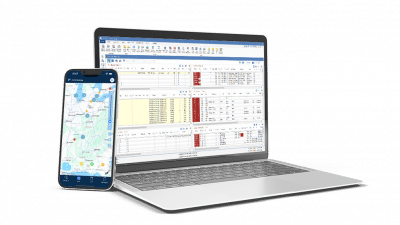
Trucking runs on tight deadlines, so you need fast answers from your TMS. You might want to know which loads clear your target rate per mile before a competitor books them, or which lane made money last month. Getting those answers from a dropdown or filter panel is slow, because you have to know which filters to use and in what order. A report request takes longer, since someone else runs the query. Natural language search returns answers instantly because you type the question the way you’d say it out loud. Here’s how it works, where dispatch teams use it, and what’s live now.
Key Takeaways
- Natural language search in TMS answers users’ questions directly. It replaces filter-based search, which requires users to select the correct sequence of filters or file a report request for a TMS search.
- One capability covers two dispatch jobs. Natural language search finds and ranks inbound freight. It also answers performance questions about freight you already ran.
- Dispatch Research is live inside PCS TMS. Powered by Cortex AI, it answers reporting questions for carriers and asset-based brokerages and displays the date range it interpreted before results load.
- Cortex AI encodes 25+ years of freight expertise. Dispatch Manager analyzes 36+ data points on drivers, assets, and lanes to recommend driver assignments across your whole fleet. Dispatchers review and approve.
- Dispatch Research is built for carriers and asset-based brokerages. Shippers do not have access to it.
What natural language search means in TMS
Natural language search in TMS lets you ask a question in plain dispatch language and get a direct answer. You type the question the way you would naturally ask it to the person sitting next to you. AI matches your words to the data fields where your TMS stores each detail, including equipment type, geography, rate threshold, and date range, then applies the filters and returns the answer.
You already know the answer is somewhere in the TMS, because your operation put it there. The work is getting it out, and with a filter-based approach, that means knowing which field contains the right information and the order to apply each filter.
Dispatchers ask two types of questions repeatedly. The first is about freight you have not booked yet, like which available loads will make money on the trucks you have open. The second is about historical data, like which lanes, customers, or dispatchers earned the most margin. Both are plain questions with specific answers.
Filtered search vs. natural language search in TMS
Filtered search requires dispatchers to know which fields will produce the right answer, stack their selections in the right order, and rebuild that stack whenever they revise their question. Requesting a report hands the question to someone else to build.
The query may sit in someone’s queue for hours or days. What comes back answers the exact question you filed. If the situation has changed, or you need one variable adjusted, you file another request and wait again. PCS builds natural language search into the dispatch workflow that carriers and asset-based brokers already run.
The following table compares all three approaches on what you have to do, how long the answer takes, and what happens when the question changes.
| Approach | What the user has to do | Time to an answer | When the question changes |
|---|---|---|---|
| Dropdown and filter search | Know the fields, stack selections in order, re-sort results | Minutes, once you know the path | Rebuild the filter stack from the top |
| Report request to an analyst or admin | Write the request, submit it, wait | Hours or days, depending on the queue | File a second request and wait again |
| Natural language query | Type the question, for example “show flatbed loads over $3 RPM” | Seconds | Restate the question and ask again |
One question rarely settles anything on a dispatch floor, and each new version of it means rebuilding the filter stack or filing another report request. With natural language search, you just ask the new question.
How natural language search answers a dispatch question
Cortex AI is PCS’s native AI engine, built into the TMS itself. Here is what happens between the question and the answer.
- You ask: A freight search might be “show flatbed loads over $3 RPM.” A reporting question might be “what were my top five lanes last month.” The system reads the criteria out of each one. From the first it takes equipment type and rate threshold. From the second it takes the lanes to rank and the date range. It builds the filters you would otherwise select by hand.
- It confirms. Before any results appear, the system shows you the date range it pulled from your question. For an operations leader or an IT director evaluating an AI feature, this is the most useful step in the process. If the system misread the question, you catch it here, instead of acting on a number that answers something you did not ask. The Dispatch Research feature page shows each step, from the question to the confirmation screen to the results.
- You see the answer, then check it. Results come back as a table, bar chart, line chart, or pie chart, with any incomplete data flagged. Click into any result to open the full load record, including pickup, delivery, miles, equipment, and margin. Every number in the answer traces back to the individual loads behind it, so you can verify what the system returned before you act on it.
You ask the question from inside the TMS you already have open. There is no second tool, no separate login, and no switching between systems to get an answer about the work in front of you.
Where dispatch teams use natural language search
Load review and selection
You decide which incoming loads to take, based on which ones will clear your target rate on the trucks you have open. Plain-language queries replace the filter stack you would otherwise rebuild every time rates change. Load Opportunity Manager collects incoming load offers from broker emails, EDI feeds, load boards, and documents, then ranks them by margin potential, reload fit, lane preferences, and customer priority.
Driver assignment
In this case, you need to match an available driver to a booked load, checking location, hours, and equipment. Manual matching means clicking through availability screens one driver at a time. Dispatch powered by Cortex scores each load against every available driver in your fleet and recommends the best match, showing the score and the runner-up behind each recommendation. Dispatchers review and approve. Dispatch Manager covers this across TL, LTL, intermodal, and brokerage boards.
Reporting for carriers and asset-based brokerages
Reporting questions fall into four types.
- Financial questions cover margin by lane, revenue by customer, and accessorial cost drag.
- Operational questions cover late deliveries, lane frequency, and load volume by dispatcher.
- Customer questions cover which accounts are growing, shrinking, or costing margin.
- Management questions cover top performers and where margin is leaking.
You type any of these as a question, and the answer comes back, with no report request to file. Dispatch Research also suggests questions in each of the four areas if you are not sure how to phrase what you need.
Load selection, driver assignment, and reporting are three places where natural language search saves a dispatcher time. Request a demo to see Dispatch Research answer questions about your own freight.
Dispatch Research brings Cortex AI to reporting
Dispatch Research is a natural language query tool inside PCS TMS, powered by Cortex AI. It answers reporting questions for carriers and asset-based brokers in plain English. The Dispatch Research feature page shows the query flow end to end. The Cortex AI launch introduced modules for driver assignment, load capture, and backhaul.
Load Opportunity Manager uses natural language search to find and rank freight. Dispatch Research uses the same search to answer questions about past performance. Both run on the Cortex AI engine, inside the dispatch workflow, under one login.
Cortex AI is powered by 25+ years of freight operations expertise, encoded into the platform’s algorithms. Cortex Dispatch Manager analyzes 36+ data points on drivers, assets, and lanes across your whole fleet to recommend or automate driver assignments, and cuts tender-to-dispatch time from hours to minutes with one-click assignment based on the optimal driver match.
Dispatch Research is built for carriers and asset-based brokerages. Shippers do not have access to it. The natural language search capability also flags incomplete data, telling you which field is missing and how much, so you know when an answer is built on partial data before you act on it.
See Dispatch Research run on your own freight data
The whole idea behind natural language search in TMS is to avoid delays when getting the dispatch answers you need. Dispatch Research is built into PCS TMS, so carriers and asset-based brokerages can use it for reporting and freight-finding questions from your TMS without filing a ticket or configuring filters.
A demo takes 20 minutes and uses your own data. You ask a question about your own lanes, margin, or drivers, and the answer comes back while you watch. Show Me Dispatch Research on My Data.
Frequently Asked Questions About Natural Language Search in TMS
Yes. Dispatch Research supports context switching between truckload and brokered freight, so an asset-based brokerage can ask the same question of each book of business and get separate answers. Margin behavior differs sharply between your assets and your brokered capacity, so a blended number can hide a loss on one side, because the profitable book offsets it and the average still looks acceptable.
Yes. You name a query once and pull it up again with one click, and it runs against current data each time. A report you need every week or every month gets built once and reopened after that.
You can export search results to CSV, Excel, PDF, and Word, or print them directly. The person who asked the question is often someone other than the person running the query. A controller who wants the numbers in a spreadsheet and an owner who wants a clean summary need different formats, and both can come from the same answer without anyone rekeying it.
Dispatch Research shows its interpretation of your question before it returns results, including the date range it applied, so you can spot an error before you act on the number. Every result can be opened to the individual load records behind it, and any incomplete data is flagged by field.
No. Dispatch Research is scoped to carriers and asset-based brokerages, which is where its data model and question categories are built to work. Shippers with transportation management needs are served by PCS’s Shipper TMS, a separate product built for outbound optimization, carrier management, and shipment visibility.