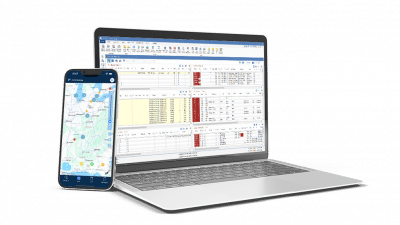
Truck load planning software matches each load to a driver and truck, sets the load order, and lines up what each truck hauls next. It weighs every open load against every available driver at once, and redoes the plan when a load arrives, a load cancels, or a driver runs short on hours.
Shippers use the same name for a different tool, one that fits pallets and cartons into a trailer or container. This guide covers the carrier side, including how fleet load planning works inside dispatch, what poor planning costs carriers, and how to check an AI load plan before accepting it.
Summary
- Two tools share one name. Shippers use cargo-loading software to fit freight into a trailer, while carriers use load planning software to decide which driver and truck run each load.
- Carriers have almost no margin for planning mistakes. According to ATRI, the cost to run a truck hit a record high in 2025. Truckload and refrigerated carriers earned less than a cent of operating profit on each dollar of revenue.
- Empty miles stayed high while offices shrank. The Trucker’s write-up of ATRI data shows about one in six non-tank miles ran empty in 2025. Over the same period, carriers cut non-driver staff.
- Plan the whole fleet at once. PCS’s Cortex AI scores every open load against every available driver in one pass. It re-plans whenever a load, a truck, or a driver’s hours change.
- Dispatch shapes driver retention. A spring 2026 driver survey reported by Transport Topics found nearly three in five drivers looking for a new driving job, up from fewer than half a year earlier. Besides pay, drivers care about their lanes and home time, and dispatch controls both.
- Check the reason behind every AI recommendation. A good AI load plan explains why it picked each driver, such as lower deadhead, enough hours of service (HOS), or lane history. The dispatcher can accept or override each one.
What is truck load planning software? Two different tools
Truck load planning software is a tool that decides how freight gets loaded or who hauls it. The answer depends on who is asking. Shippers use it to fit cargo into a trailer, and carriers use it to assign loads to drivers and trucks.
Most search results for this term cover cargo-loading software for shippers. These tools build 3D load diagrams, apply stacking rules for mixed pallets, and check weights against DOT limits so the trailer leaves the dock full and legal.
For carriers, load planning works from driver HOS, truck location, equipment type, and lane. Dispatch already tracks all of that, so load planning belongs in the same transportation management system (TMS) dispatch uses.
On most truckload freight, the shipper’s crew loads the trailer and decides how the cargo fits. The carrier’s dispatchers decide who runs the load, when, and what the truck hauls next. Those decisions set the empty miles and shape each driver’s week.
| Cargo-loading software | Carrier load planning software | |
| Used by | Shippers and warehouses | Carrier dispatchers |
| Decides | How cargo fits in a trailer or container | Which driver and truck run each load, and in what order |
| Works from | Pallet dimensions, stacking rules, weight limits | Driver HOS, truck location, equipment type, lane |
| Lives in | ERP or warehouse systems | The TMS dispatch uses |
What empty miles and poor load planning cost carriers
One 150-mile empty run costs a carrier about $350, which wipes out the profit on roughly $35,000 of freight at a 1% margin. With margins this thin, dispatch has to catch the empty run in the plan before the truck leaves.
The numbers behind that math:
| Measure | Figure | Source |
| Average cost to run a truck | $2.336 per mile, the highest on record | ATRI |
| Truckload and refrigerated margins | Below 1% | ATRI |
| Flatbed margins | Negative | ATRI |
| Non-tank deadhead | 16.5% of miles | The Trucker |
How one empty run erases the profit:
- 150 empty miles × $2.336 per mile ≈ $350 in operating cost
- $350 ÷ 1% margin ≈ $35,000 of freight to earn it back
In a looser freight market, carriers could absorb a $350 mistake. However, with margins this thin, dispatch has to catch the empty run in the plan before the truck leaves.
Empty miles stayed high through the downturn, even as carriers cut non-driver staff, according to ATRI. Fewer people in the office means fewer eyes on the board to catch an empty leg before it goes out.
Fuel adds to the cost. The same report found that fuel rose more slowly than inflation, but every empty mile still burns diesel at the current pump price, which the U.S. Energy Information Administration publishes weekly.
How truck load planning software re-plans the whole fleet
Load planning software re-plans the whole fleet by scoring every open load against every available driver at once, then redoing the plan whenever a load, truck, or driver’s hours change. That’s what sets it apart from a manual board, where a dispatcher picks a load, finds a driver, and moves on to the next. The manual approach works until the third load needs the driver who already went to the first. Looking at the whole board at once keeps the best match for one load from wrecking the plan for the next.
In PCS’s Carrier TMS, whole-fleet planning runs in Dispatch, our AI-powered dispatch software, built on the Cortex AI engine. The four steps below show how it works, from capturing new freight to lining up return loads.
Capturing and ranking new freight
Freight reaches a dispatch office through many channels, and someone has to sort all of it before any planning starts. A load board is where a carrier finds freight, and load planning is how dispatch decides which driver runs it.
The Cortex load opportunity manager pulls freight from every channel into one place.
- Broker emails and attachments
- EDI tenders
- Load boards
- Uploaded spreadsheets, documents, and CSV files
- Phone calls, taken by Cora, an AI voice agent
After capture, the load opportunity manager scores and ranks each load on six factors.
- Revenue per loaded miles
- Margin per loaded mile
- Driver match
- All-in cost per mile
- Rate variance vs market index
- Lane density
- The carrier’s own rules
The dispatcher works from one ranked list, and one click adds a good load to the plan, ready to dispatch. Because loads get ranked as they come in, nobody has to copy and paste load details or chase cheap freight.
Scoring every open load against every available driver
Cortex Dispatch Manager analyzes more than 36 data points on drivers, trucks, and lanes. It suggests the best driver for each load or assigns the load automatically. We built that scoring on more than 25 years of freight operations experience. The dispatcher sees each driver’s availability, location, remaining HOS, and equipment type on one board.
When the dispatcher agrees with a recommendation, they assign the driver with one click. That step cuts tender-to-dispatch time from hours to minutes.
Re-planning when loads, trucks, or hours change
Cortex redoes the whole fleet plan whenever something changes. A new load from the load opportunity manager, a canceled load, a truck that breaks down, or a driver running low on hours each makes Cortex check every open load and available driver again.
A plan that doesn’t update is out of date after the first change of the morning, and the dispatcher ends up rebuilding it from memory. When Cortex redoes the plan, the new suggestions already cover the change and any other loads it affects. Cortex handles truckload and LTL freight the same way.
Chaining routes and return loads up to 30 days out
Cortex plans up to 30 days out and automatically links multi-stop routes, so each delivery leads into the next pickup. Looking that far ahead, a dispatcher can see where a truck will deliver next week and what freight is near that stop.
ATRI put the 2025 cost to run a truck, excluding fuel, at $1.854 per mile. Carriers pay most of that cost whether the truck is loaded or empty.
Backhaul Booster is the Cortex module built to cut empty miles. Because the plan already shows where every truck will deliver, Backhaul Booster scans the carrier’s network for profitable return loads.
When Backhaul Booster finds a return load, it emails the shipper under the carrier’s brand and can follow up with an AI-powered voice call. That way, the carrier can book the load before the truck runs empty.
For more on filling empty return trips, see our guide to truck backhaul optimization.
How load planning affects drivers and dispatchers
Load planning shapes each driver’s lanes, home time, and hours, and those factors weigh on whether drivers stay.
In spring 2026, a record 58.1% of truck drivers were looking for a new driving job, and they want more than better pay and sign-on bonuses.
Drivers are also a carrier’s largest expense. In HDT’s coverage of ATRI data, driver wages and benefits came to just over $1 per mile in 2025. When pay alone doesn’t keep a driver, dispatch decides much of what does. Drivers notice which lanes they run, whether they get home when dispatch said they would, and whether their loads fit the hours they have left.
Planning around HOS and driver business rules
Good planning software checks each driver’s remaining HOS before suggesting a load, so it doesn’t offer a run the clock won’t allow. It also follows the carrier’s own rules for which drivers get which freight, such as what equipment a driver runs and which lanes fit the fleet.
For years, one dispatcher kept that knowledge in their head, from who could take a long run this week to who had history on a tough lane. When that dispatcher was out sick or left the company, the knowledge went with them. Drivers felt the difference in the loads they got.
When the carrier sets those rules in the system, the software applies them the same way every morning, no matter who is working the desk.
Shifting dispatchers to exception management
With the software handling the everyday matching and re-planning, dispatchers spend the day on problems no plan can solve. That means a truck that breaks down, a receiver that won’t unload, a shipper who moves an appointment, or a driver who needs to talk.
Those calls still need someone who knows the drivers and customers, so AI doesn’t replace the dispatcher. Our companion post explains why AI tools should support dispatchers.
How to read and override an AI load plan
Before accepting a recommendation, read the reason behind it. The software might pick a driver because the load cuts deadhead, because the driver has enough HOS to make the delivery window, or because they’ve run that lane before.
The reason tells a dispatcher what the AI load plan weighed, so they can spot what it missed. A pick that cuts deadhead can still be the wrong call if the receiver on that lane holds trucks for hours. It’s also wrong if that driver just told dispatch about a family situation.
Use the reason as a quick checklist:
- Deadhead: is the empty leg to pickup the shortest available?
- Hours of service: does the driver have enough HOS left for the delivery window?
- Lane history: has the driver run this lane, and are there known issues at the receiver?
- What the system can’t see: anything the driver or customer told dispatch directly.
Override the plan in those cases. A system built to assist dispatchers lets them reject any recommendation. If the plan keeps sending the wrong driver to a lane, the reasons show which business rule is causing it. Fix that rule once, and the plan stops repeating the mistake.
See whole-fleet load planning on live freight
On a manual board, one canceled load can send a dispatcher back through the morning’s assignments. While the dispatcher rebuilds the plan by hand, an empty leg nobody spotted goes out, and the carrier pays for it in diesel and driver pay.
Our Carrier TMS runs fleet load planning in the same system as dispatch, accounting, fleet management, and mobile, with Cortex built in. When a load cancels, Cortex re-plans every truck and starts looking for a return load before the empty leg goes out. It’s designed for carriers running from 25 to more than 1,000 trucks.
“Our dispatchers don’t have to juggle small tasks anymore,” says Director of Operations at Royal Logistics. “Cortex gives us solid recommendations and lets us move more loads without the back‑and‑forth.”
The clearest test of planning software is a carrier’s own freight.
Book a personalized demo and bring the loads on the board today. We’ll show how Cortex would match them to available drivers and where it would find the return legs.
Frequently asked questions about truck load planning software
Not quite, but for carriers, the two work best as one system. Load planning decides which driver and truck run each load and what each truck hauls next. Dispatch assigns and tracks those loads. Planning depends on driver HOS, truck location, equipment type, and lane, which dispatch already tracks. In PCS’s Carrier TMS, Cortex plans the whole fleet inside Dispatch.
Truck loading software shows a shipper how to fit cargo into a trailer or container. Carrier load planning software decides which driver and truck run each load. Loading tools build 3D load diagrams, apply stacking rules, and check weights. If the problem is deciding who runs each load, look for fleet planning software within a TMS. It should match drivers across the whole fleet at once, check remaining HOS, and show the reason behind each recommendation.
Yes. Planning up to 30 days out shows where each truck will deliver next, so dispatch can line up a return load before the truck runs empty. That matters because ATRI put 2025 non-tank deadhead at 16.5% of miles. Backhaul Booster scans the carrier’s network for profitable return loads and contacts the shipper under the carrier’s brand. See our guide to truck backhaul optimization.
Pricing varies by category and vendor, so weigh each price against the empty miles the plan could cut. At ATRI’s record per-mile operating cost for 2025, every empty mile the plan avoids comes straight off the carrier’s costs. When comparing quotes, check whether planning comes with the TMS or is sold as a separate add-on. Also ask whether freight intake, backhaul sourcing, and driver matching cost extra.
Yes, though how it connects depends on the type. Cargo-loading tools commonly connect to ERP and warehouse systems so order and item data flow into the load diagram. Fleet planning software either comes built into the TMS or plugs into an existing TMS as a separate add-on. Built-in planning draws on the same driver, equipment, and load records dispatch uses, so nothing needs to sync between systems. An add-on can suit a carrier that wants to keep its current TMS and add planning on top.