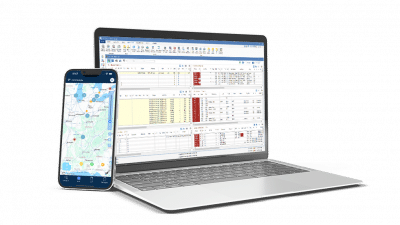
TL;DR: Load management software tracks freight from booking to delivery, but not all platforms are built the same. Some handle dispatch only. Others bundle accounting, fleet management, and AI optimization into one system. This breakdown covers seven options across different fleet sizes, so carriers can find the right fit without sitting through a dozen sales demos.
Your dispatcher just spent 20 minutes finding a driver for a load that should’ve taken seconds. Meanwhile, the billing team is chasing a POD stuck in a truck cab somewhere in Kansas. And that backhaul opportunity? Gone before anyone saw it.
That’s what load management software is supposed to prevent. And before dispatch even happens, there’s another problem: which loads are worth taking in the first place? Dispatchers spend hours buried in email attachments and spreadsheets, guessing which opportunities will actually make money. By the time they sort through the noise, the best freight is gone.
“Load management” means different things to different vendors. Some platforms handle dispatch and call it a day. Others connect dispatch to accounting, fleet management, and AI-powered optimization, so data flows instead of getting re-keyed.
Here’s how seven platforms stack up.
1. PCS Software: Best All-in-One TMS for Mid-Market and Enterprise Carriers
PCS Software takes the all-in-one approach seriously. Dispatch, accounting, fleet management, settlement, and reporting share one database. No modules to bolt on. No third-party plugins creating integration headaches.
What sets PCS apart is Cortex AI. It analyzes 36+ data points (driver location, hours, equipment, preferences) and recommends the optimal match. One click to assign. Cortex also includes Backhaul Booster, which finds profitable return loads and reaches out to shippers via email or AI-powered voice before wheels stop turning.
RDX LLC switched to PCS and now saves $100,000 annually by eliminating the need for dedicated IT staff. Their leadership says: “PCS turned out to be the best decision we ever made.”
Why choose PCS Software:
- Dispatch, accounting, and fleet management in one system. No re-keying data
- Load Opportunity Manager captures every inbound opportunity into one hub. Cortex AI scores each load by margin potential, reload fit, and customer priority, then surfaces winners first.
- Natural Language Search skips filters. Type “flatbed loads near Dallas over $3 RPM” and get ranked results.
- Cortex AI recommends optimal driver matches from 36+ data points
- Backhaul Booster automatically finds and secures return loads
- Scales from 25 trucks to 1,000+ without switching platforms
- Built by truckers since 1996
- 70+ integrations with ELDs, fuel cards, and load boards
Best for: Carriers running 25-1,000+ trucks who want everything integrated. Also fits enterprise operations that need multi-terminal and blended-fleet management.
2. Samsara: Best for Safety-First Fleets Needing Telematics Integration
Samsara leads with telematics and safety. AI dash cams, real-time GPS, driver coaching. Their load management features exist but aren’t the core strength. For full dispatch and accounting, Samsara typically pairs with a TMS.
Samsara nails the safety side: 99% collision detection, real-time HOS visibility, driver safety scoring.
Why choose Samsara:
- Industry-leading AI dash cams and safety scoring
- Real-time GPS and ELD built in
- Strong driver coaching tools
- Excellent telematics data
Best for: Fleets prioritizing safety and willing to run separate systems for dispatch and accounting. Works well as a telematics layer on top of an existing TMS.
3. Rose Rocket: Best for Mid-Market Carriers Wanting a Modern Interface
Rose Rocket targets carriers who hate legacy interfaces. Cloud-native, clean design, faster implementation than enterprise systems. Handles both carrier and brokerage operations.
Founded in 2015, Rose Rocket doesn’t have the track record of older players. But their focus on user experience and customer service has built a solid reputation among mid-market fleets.
Why choose Rose Rocket:
- A modern interface that dispatchers learn quickly
- Handles carrier and broker operations in one system
- Customer portal for shipper visibility
- API-first architecture for integrations
- Faster implementation than legacy platforms
Best for: Carriers and brokers who value modern design and fast deployment. Compare carefully against options with stronger accounting integration if the back office is a pain point.
4. Axon Software: Best for Accounting-First Operations
Axon Software approaches trucking from the accounting side. If the CFO is driving the software decision, Axon speaks their language: full general ledger, comprehensive settlement, IFTA reporting, equipment profitability tracking.
Dispatch exists but isn’t as feature-rich as dispatch-first platforms. The real strength is financial management built specifically for trucking.
Why choose Axon:
- ERP-level trucking accounting
- Strong settlement and driver pay functionality
- Automated IFTA reporting
- Equipment profitability tracking
- Particularly strong for Canadian carriers
Best for: Carriers where accounting accuracy and financial visibility are top priorities. Interface feels less modern than newer competitors.
5. TMW Suite (Trimble): Best for Maximum Customization at Enterprise Scale
TMW Suite competes in the enterprise space with over 30 functional modules, extensive integration capabilities, and on-premise or cloud deployment options.
Like McLeod, TMW implementations are significant investments. Expect 6-12 months and professional services for configuration. You get customization that most carriers will never need.
Why choose TMW Suite:
- 30+ modules covering every operational area
- Advanced optimization and network planning
- Flexible deployment (on-premise or cloud)
- Handles complex multi-modal operations
Best for: Large carriers (500+ trucks) with dedicated IT teams and complex, specialized requirements. Overkill for mid-market fleets.
6. Truckbase: Best for Small Fleets Wanting Simple, Modern Dispatch
Truckbase targets smaller fleets that need more than spreadsheets but aren’t ready for a full TMS. Mobile-first, clean interface, focused on core dispatch functionality.
Document capture from phone cameras, simple load tracking, and basic customer visibility tools. If accounting integration and complex settlement are needed, Truckbase won’t cover them.
Why choose Truckbase:
- Modern, mobile-friendly dispatch
- Quick setup
- Driver app with document capture
- Affordable per-truck pricing
Best for: Fleets under 50 trucks wanting simple dispatch software. Plan to outgrow it if scaling past that size.
Load Management Software Comparison: Features by Fleet Size
| Platform | Best For | Fleet Size | AI Dispatch | Built-in Accounting |
|---|---|---|---|---|
| PCS Software | All-in-one TMS | 25-1,000+ | Yes (Cortex) | Yes |
| Samsara | Safety/telematics | Any | No | No |
| Rose Rocket | Modern UX | 25-300 | Limited | Basic |
| Axon | Accounting-first | 25-500 | No | Yes (strong) |
| TMW Suite | Maximum customization | 500+ | Limited | Yes |
| Truckbase | Small fleet simplicity | Under 50 | No | No |
How to Choose Load Management Software for Your Fleet Size
- If dispatchers are drowning in manual work, look for AI-powered matching. PCS Cortex recommends optimal drivers from 36+ data points. Something that once took 30 minutes now takes one click.
- If billing lags behind delivery, prioritize integrated accounting. Platforms like PCS and Axon connect dispatch to invoicing so PODs flow straight to billing.
- If empty miles are killing margins, find automated backhaul tools. PCS Backhaul Booster scans for return loads and contacts shippers automatically.
- If safety is the top concern, Samsara’s telematics and dash cams lead the market. Then pair with a TMS for dispatch.
- If the budget is tight and the fleet is small, Truckbase gets the basics done affordably. Plan for something more robust as the operation grows.
- If opportunity capture is the bottleneck, look for AI-powered scoring that ranks inbound freight before dispatchers touch it. PCS Load Opportunity Manager centralizes every opportunity source and surfaces high-margin loads automatically. Teams manage more freight without adding headcount.
Which Load Management Platform Fits Your Operation
Load management software should move freight faster and get billing out the door without the chaos. Which one fits depends on how many trucks you run and whether your back office is a mess.
For carriers in the 25-500 truck range, PCS Software delivers what most fleets actually need: dispatch, accounting, fleet management, and AI-powered optimization in one platform. No six-figure implementations or year-long rollouts.
Phoenix Cargo launched in Columbus in 2017, managing loads through spreadsheets and load boards. Three years later, they adopted PCS. Today, they run 400+ trucks and track revenue per mile and cost accounting with the precision that manual systems couldn’t deliver. The platform eliminated deadhead waste and gave them the financial transparency to scale without adding back-office headcount.
Royal Logistics runs 100 trucks and 240 trailers out of Fargo. Director of Operations Kaleb Groce says that before Cortex, finding backhauls could eat three hours a day. Now everything lives in one system. “PCS is one of those softwares where everything is easier than you expect,” Groce says, “because you’re used to taking ten steps for one task.”
Spending hours sorting through emails and load boards to find freight worth taking? Load Opportunity Manager scores every opportunity and pushes winners to the top.
Schedule a demo and see what 30 years of trucking experience built into software looks like.