Empty miles are one of the biggest hidden costs in trucking — the non-revenue routes carriers drive after a delivery.
They happen when trucks run without freight. This leads to wasting fuel, driver hours, and overall opportunity on the road. For carriers and brokers, those miles quietly drain profit and distort key performance metrics like cost per mile and asset utilization.
Fleets that manage to cut empty miles see immediate gains in fuel efficiency, sustainability, and profitability. And with the right transportation management system (TMS), it’s easier than ever to spot wasted movement and turn every mile into a productive one.
In this guide, you’ll learn what causes empty miles, how they reduce profitability, and how AI tools inside PCS TMS help eliminate them in real time.
What Are Empty Miles in Trucking (and Why They Matter)?
Empty miles refer to the distance a truck travels without carrying a load, usually after delivering freight and before the next pickup. These non-revenue miles are also called deadhead miles, and they represent one of the largest sources of inefficiency in transportation.
According to industry estimates, between 15% and 30% of all truck miles are driven empty. For example, if a truck drives 100,000 miles per year and 20% of those miles are empty, that’s 20,000 wasted miles — consuming fuel, driver hours, and maintenance budget without generating any revenue.
The impact of empty miles goes beyond cost.
Empty miles contribute to higher emissions, increase maintenance expenses, and make it harder to balance driver schedules. For fleets operating on tight margins, even a small reduction can create measurable gains in profit and performance.
Empty miles typically occur when:
- Freight demand is uneven between delivery regions.
- Backhaul opportunities aren’t visible or matched in time.
- Dispatch decisions rely on manual processes or delayed data.
Reducing empty miles starts with visibility. When dispatchers, drivers, and planners can see all available loads and routes in real time, they can improve utilization across the entire network.
The Real Cost of Empty Miles (and How Reduction Boosts ROI)
Empty miles are often the reason why your revenue looks fine on paper, but your margins keep shrinking.
The problem is so common that many fleets just accept empty miles as part of the job, but it doesn’t have to be.
Let’s do an example breakdown:
A truck driving 100,000 miles a year with a 20% empty rate wastes 20,000 miles of fuel, maintenance, and driver time. At an average $1.85 cost per mile, that’s $37,000 in lost value per truck, per year. That doesn’t include missed revenue opportunities from unfilled backhauls. Multiply that across a 50-truck fleet, and you’re looking at $1.85 million in pure waste.
| Metric | 0% Empty Miles (Ideal) | 15% Empty Miles | 30% Empty Miles |
|---|---|---|---|
| Annual Miles per Truck | 100,000 | 100,000 | 100,000 |
| Non-Revenue Miles | 0 | 15,000 | 30,000 |
| Cost per Mile (Fuel + Ops) | $1.85 | $1.85 | $1.85 |
| Annual Cost of Empty Miles | $0 | $27,750 | $55,500 |
| Profit Opportunity Lost | — | 15–20% margin reduction | 30–35% margin reduction |
Reducing empty miles is one of the fastest and most reliable ways to increase profit margins — no added trucks, no higher rates, just smarter route optimization.
- Fuel costs drop immediately. Every empty mile removed reduces your total gallons burned. For many carriers, fuel makes up 25–40% of all operating expenses.
- Equipment lasts longer. Less wear and tear means fewer maintenance events and lower replacement frequency.
- Driver utilization improves. Fewer idle hours and empty returns mean drivers stay productive and happier with steadier pay and less downtime.
- Routes become more predictable. Better planning and backhaul matching eliminate last-minute dispatch changes that throw schedules off track.
- Profit per mile increases. When trucks spend more time generating revenue, your cost-to-income ratio moves in the right direction almost overnight.
- Sustainability strengthens your brand. With less wasted mileage, you cut emissions and build a greener, more competitive operation.
The bottom line is that empty miles are a financial drain that compounds with every trip. But once your TMS gives you visibility and AI-driven load matching, every route becomes an opportunity to recover lost margin.
How Empty Miles Impact Fleet Profitability and Performance
Every empty mile is a missed opportunity for revenue. It still costs fuel, driver pay, and vehicle wear, but without freight to offset those expenses, margins shrink fast. When multiplied across an entire fleet, the impact becomes substantial.
If even a quarter of your miles are empty, that’s a direct hit to profitability and fuel efficiency. Empty miles also reduce your load-to-truck ratio, meaning assets spend more time idle and generate less revenue per hour on the road.
Operationally, running empty throws off driver schedules, routing plans, and maintenance cycles. A driver who finishes a delivery but can’t find a return load wastes both time and hours of service. That inefficiency can ripple through dispatch, planning, and accounting, creating more manual work and unpredictable costs.
Environmentally, the issue is just as clear. Empty miles increase fuel consumption and emissions per ton-mile shipped. Fleets focused on sustainability know that reducing deadhead movement directly supports their carbon goals while improving overall utilization.
For carriers and brokers, every empty mile represents a gap in coordination. The key to reducing those gaps is smarter planning and better use of data, two areas where modern TMS technology can have an immediate impact.
6 Proven Ways to Reduce Empty Miles in Trucking
Reducing empty miles starts with better planning, tighter coordination, and data-driven decisions. Carriers that consistently track and optimize their routes see measurable gains in utilization, driver productivity, and fuel efficiency.
Here are several proven ways to cut down on wasted miles:
1. Strengthen load matching and backhaul planning
The most direct way to reduce empty miles is to fill more trucks on the return trip. A TMS helps you identify backhaul opportunities as soon as a delivery is complete. By connecting shippers, brokers, and available drivers in one platform, you can match loads faster and keep assets moving.
2. Use multi-stop and consolidated routes
Combining compatible shipments into a single trip increases load density and reduces empty runs between stops. Multi-stop routing is especially effective for regional or Less-Than-Truckload (LTL) operations where partial loads can be consolidated along similar lanes.
3. Monitor route performance regularly
Track metrics like load factor, lane utilization, and cost per mile to pinpoint where waste occurs. Over time, this helps planners identify unbalanced routes, underperforming lanes, or low-volume regions that consistently create deadhead trips.
4. Improve communication between dispatch and drivers
Empty miles often happen when drivers wait for new assignments or travel off-route for their next load. Real-time updates and mobile connectivity between dispatch and drivers ensure the next job is lined up before a truck is empty.
5. Collaborate with partner networks
Partnering with other carriers, brokers, or shipper networks expands your freight options and improves visibility into available loads. When your TMS integrates with these networks, dispatchers can automatically source return freight and avoid manual searching.
6. Leverage automation and AI tools
Automated workflows and AI-powered analytics take the guesswork out of load assignment. The system can recommend optimal loads, balance lanes, and flag inefficiencies that lead to empty runs, saving your team hours of manual coordination.
Reducing empty miles isn’t about perfection. It’s about creating visibility across routes and loads, then acting on that information fast. With the right tools in place, even small improvements can add up to thousands of revenue-generating miles each year.
How AI Technology Helps Carriers Reduce Empty Miles in Real Time
Even with strong planning, freight networks are unpredictable. Loads fall through, weather changes, and demand shifts daily. That’s where artificial intelligence (AI) becomes essential. It gives carriers the ability to respond instantly, predict opportunities, and prevent wasted movement before it happens.
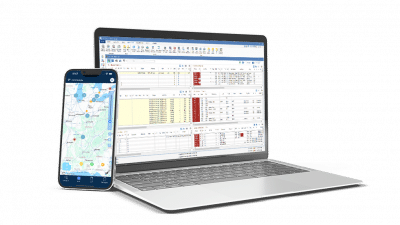
Inside PCS TMS, AI continuously analyzes live dispatch data, telematics, and customer load information to recommend profitable routes and prevent empty returns before they happen.
Here’s how AI reduces empty miles in real-world operations:
- Predictive load matching: AI identifies available trucks and upcoming shipments before routes are finalized. By analyzing past lane data, customer patterns, and load availability, it recommends the best backhaul opportunities automatically. This helps dispatch fill trucks faster and reduce deadhead miles.
- Real-time route optimization: AI constantly monitors factors like traffic, weather, and driver availability. If a truck is likely to return empty, the system suggests nearby loads or route adjustments in real time. This keeps trucks productive without manual replanning or extra check-ins.
- Automated workflow triggers: When a delivery is complete, AI automatically scans connected networks for available freight near the driver’s current location. The dispatcher receives pre-qualified load options, complete with profitability and timing data, so trucks never sit idle between assignments.
- Continuous network learning: Each trip adds new data to the system. Over time, AI learns which lanes, customers, and regions generate the most empty miles and which actions consistently reduce them. This continuous improvement loop helps planners refine network strategy and rebalance lanes for long-term efficiency.
- Profitability and sustainability gains: Reducing empty miles supports sustainability goals by cutting unnecessary fuel use and emissions. With AI-driven optimization, fleets can reduce total mileage, lower fuel costs, and achieve better carbon efficiency without manual analysis.
Cortex AI is built directly into PCS TMS, so you don’t have to juggle separate tools or exports. Every recommendation, alert, and optimization runs inside the same system your team already uses for dispatch, billing, and visibility.
Cortex AI and PCS TMS: Built-In Intelligence to Eliminate Empty Miles
Cortex AI is the intelligence engine inside PCS TMS. It’s not a plug-in or separate module. It’s built directly into the platform, working quietly behind the scenes to automate decisions and eliminate inefficiencies like empty miles.
Instead of adding another layer of software, Cortex AI connects the data your team already uses: dispatch, routing, billing, and telematics. It then turns that data into instant, profit-driven recommendations.
Here’s what that looks like in practice:
- Automated load planning: Cortex evaluates current routes, driver status, and available freight to fill trucks faster and reduce deadhead time.
- Smart route adjustments: When conditions change, the system instantly recalculates optimal routes, helping dispatchers avoid wasted miles and missed windows.
- Profit visibility in every decision: Every route suggestion and load match includes margin data, so your team knows which options drive the best results.
- Continuous learning: Cortex improves over time, learning from past shipments, lane data, and performance patterns to make smarter recommendations every day.
Because it’s part of the PCS TMS, every department benefits: Dispatchers see optimized routes in real time. Accounting gets accurate mileage and billing data automatically. Leadership sees performance trends across the entire network. An all-in-one system that keeps trucks rolling and operations running tight.
Run a More Efficient, Profitable Fleet with PCS TMS
PCS TMS brings everything together for your entire team: dispatch, routing, visibility, and accounting. The entire system is powered by Cortex AI to automate decisions that keep trucks loaded and profitable.
From predictive backhaul matching to live route optimization, every feature works in sync to help you cut waste, reduce fuel costs, and move more freight with the same resources.
Book your free and personalized demo and see how PCS helps carriers and brokers reduce empty miles, optimize routes, and increase profit margins — all through built-in AI automation.
FAQ
Yes. PCS TMS connects with more than 70 industry tools, including fuel programs, ELDs, load boards, and compliance platforms, allowing you to track, plan, and reduce empty miles without switching systems.
PCS TMS supports both carriers and brokers. Each version is designed to streamline operations, improve visibility, and drive profitability through AI-powered automation and intelligent dispatch management.
Empty miles happen when trucks travel without freight, often after deliveries or between regions with uneven demand. They can be reduced through better load matching, automated backhaul planning, and real-time visibility inside a connected TMS.
Empty miles consume fuel, pay driver hours, and wear down equipment without generating revenue. Reducing even a small percentage of empty miles leads directly to higher profit margins, better asset utilization, and lower operating costs.
The most effective methods include predictive load matching, route optimization, multi-stop planning, and stronger communication between dispatchers and drivers. A TMS like PCS automates these workflows, ensuring trucks spend more time earning.
AI analyzes live dispatch, telematics, and route data to predict available freight and recommend profitable loads before a truck goes empty. With Cortex AI built into PCS TMS, those insights appear instantly, helping carriers stay efficient and profitable.