TL;DR: Dispatch optimization means getting the right driver on the right load at the right time, every time, without burning out dispatchers. Most carriers leave money on the table through suboptimal assignments, missed backhauls, and manual processes. The fix is real-time visibility, AI-powered matching, and automation that lets dispatchers manage exceptions instead of spreadsheets.
Somewhere right now, a dispatcher is staring at a board, wondering which of 47 available drivers should take the load that just came in. Driver A is closest but has a medical appointment tomorrow. Driver B has hours but hates that lane. Driver C would be perfect, but is picking up another load in an hour.
Thirty minutes later, the load is assigned. Decent match. Not optimal, but workable.
Multiply that across 50 loads per day, 250 days per year. If each assignment takes 30 minutes instead of 5, the carrier loses over 5,000 dispatcher hours annually. That’s more than two full-time employees doing nothing but assignment busywork.
That’s what dispatch optimization fixes. Better decisions, faster. That’s the whole game.
What Dispatch Optimization Means
Optimal driver-load matching. Every load has an ideal driver based on location, hours, equipment, and preferences. Good software surfaces the ideal match fast. Dispatchers stop settling for whoever’s available.
Minimized empty miles. A truck running empty is pure cost. Optimization means securing backhauls and keeping revenue miles high.
Reduced dispatcher workload. If dispatchers spend 70% on routine assignments and 30% on problems, optimization flips that ratio.
The Three Pillars of Optimized Dispatch
Pillar 1: Real-Time Visibility
Optimization requires information. Dispatchers making decisions on stale data make suboptimal choices.
| Data Point | Where It Comes From |
|---|---|
| Driver location | GPS/telematics/driver app |
| Hours of service | ELD integration |
| Equipment status | Fleet management system |
| Load status | TMS/dispatch software |
The visibility gap: Driver location is in the telematics portal. Hours are in the ELD system. Equipment status is in a spreadsheet. Customer requirements live in someone’s head.
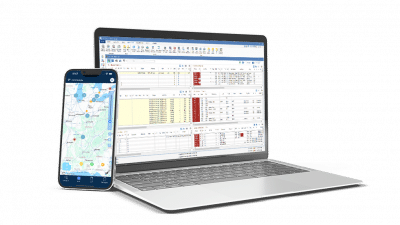
All-in-one TMS platforms like PCS TMS consolidate this data into a single view. No tab-switching. No phone calls to confirm what the system should know.
Royal Logistics runs 100 trucks and 240 trailers. Before Cortex, Director of Operations Kaleb Groce says finding backhauls could eat three hours a day. Now, Backhaul Assistant surfaces options based on relationships and lane history, and dispatchers can reach contacts directly instead of sitting on hold with brokers they’ve never worked with.
Pillar 2: Smart Driver-Load Matching
Matching a driver to a load involves more variables than most realize:
- Geographic proximity to pickup
- Hours available for the trip
- Equipment type and trailer requirements
- Driver qualifications (hazmat, tanker, TWIC)
- Customer preferences
- Driver preferences and home time
A dispatcher processing these manually creates bottlenecks. Experienced dispatchers develop intuition, but intuition doesn’t scale, and it walks out the door when they leave.
AI-powered matching: PCS Cortex analyzes 36+ data points and surfaces the best driver for each load. The dispatcher sees the recommendation and confirms with one click, or overrides if they know something the system doesn’t.
| Where It Comes From | Time Per Assignment | Scalability |
|---|---|---|
| Manual | 15-30 minutes | Limited by dispatcher capacity |
| Rules-based filtering | 5-10 minutes | Better |
| AI-powered (Cortex) | 1-3 minutes | Excellent, exceptions only |
Pillar 3: Backhaul Optimization
Empty miles are the profit killer nobody talks about. A truck returning empty costs fuel, wages, and equipment wear without generating revenue.
Finding a backhaul requires knowing when and where current loads deliver, what freight is available, whether the driver has hours, and whether freight fits the equipment. That’s a lot to track across a fleet in real time.
PCS Cortex Backhaul Booster automates this:
- Scans freight matching driver location, hours, and equipment
- Identifies opportunities before current loads are delivered
- Reaches out to shippers automatically (branded email or AI voice)
- Secures return loads while wheels are still turning
The math: A 50-truck fleet averaging 15% empty miles loses $15,000-25,000 monthly in unrealized revenue. Reducing empty miles by 5 percentage points adds $60,000-100,000 annually.
Common Optimization Mistakes
Optimizing in silos. Dispatch optimization that ignores accounting creates downstream problems. Integrated platforms keep dispatch and billing connected.
Over-relying on intuition. Institutional knowledge that lives only in people’s heads is fragile. Encode best practices into systems.
Ignoring driver preferences. A mathematically optimal assignment that puts a driver far from home on their kid’s birthday isn’t optimal. Drivers who feel ignored quit.
Treating optimization as a project. Installing software is a project. Making dispatch better over time is a process requiring ongoing measurement and refinement.
Measuring Optimization ROI
| Optimization Area | How to Measure |
| Faster assignments | Dispatcher hours saved × hourly cost |
| Reduced empty miles | Additional revenue from loaded miles |
| Better driver utilization | Revenue increase per truck |
Sample calculation for 50 trucks:
- Baseline: 20 minutes per assignment, 15% empty miles
- After optimization with PCS Cortex: 5 minutes per assignment, 10% empty miles
Annual savings:
- Dispatcher time: 15 minutes saved × 50 loads × 250 days = ~$60,000-75,000
- Empty mile reduction: $60,000-100,000
Total: $120,000-175,000 annually, covering TMS costs multiple times over.
Phoenix Cargo grew from a startup to 400+ trucks. Their accounting manager puts it simply: “Everything is just easier on PCS—so much easier.” The TMS replaced their spreadsheet-based invoicing with Compass factoring integration and direct email billing, cutting errors and speeding up cash flow.
The Bottom Line
Dispatch optimization means better decisions, faster, with technology handling the routine so dispatchers can focus on exceptions.
The carriers pulling ahead aren’t the ones with the most trucks. They’re the ones whose dispatchers manage 30 trucks as easily as others manage 15.
How many hours did your dispatchers spend this week on assignments that AI could handle in seconds? How much revenue disappeared in empty miles because backhauls weren’t found fast enough?
PCS Cortex puts AI-powered dispatch, automated backhaul matching, and integrated accounting in one platform. Built by truckers who understand what actually matters.