Artificial intelligence is reshaping transportation technology. But in freight, real intelligence doesn’t come from clever math alone. It comes from decades of operational experience.
The Rush to “AI-Powered” TMS Platforms
Artificial intelligence has quickly become the newest buzzword in transportation technology.
Suddenly every platform claims to be “AI-powered.” New startups are launching AI-native products, while established systems are adding optimization engines or announcing partnerships designed to bring AI into freight decision-making.
The excitement makes sense. AI has the potential to help fleets make faster decisions, uncover better freight opportunities, reduce empty miles, and improve margins.
But there’s a detail that often gets overlooked.
AI doesn’t become useful overnight.
In trucking, meaningful AI requires something many new platforms simply don’t have yet: decades of operational experience.
Freight Decisions Aren’t Just Math Problems
Many optimization tools in the market rely heavily on statistical models. These systems analyze variables like miles, rate per mile, equipment type, and availability to determine the mathematically optimal outcome.
On paper, that sounds powerful.
But anyone who has spent time inside a fleet operation knows dispatch decisions rarely come down to math alone.
Dispatchers also consider things like:
- Long-term customer relationships
- Strategic lanes and reload opportunities
- Driver preferences and retention
- Service commitments that protect future freight
A mathematical model may recommend the highest-margin load.
A seasoned dispatcher might choose a different move because it protects a key customer or positions a truck for a more profitable reload tomorrow.
In other words, the real world doesn’t always follow the formula.
Why Data Depth Matters in AI
For AI to deliver meaningful value in freight operations, it needs to learn from how fleets actually run their business.
That requires enormous amounts of historical operational data.
Not just load records, but the decisions and outcomes behind them:
- Which dispatch decisions increased profitability
- Which loads created stronger reload opportunities
- How driver availability affects execution
- When fleets prioritize relationships over short-term margin
Over time, these patterns allow AI systems to recognize what works and what doesn’t.
But depth of data alone isn’t enough. AI also needs the full operational picture.
That’s why systems that serve as the system of record for fleet operations have a distinct advantage. They capture the entire lifecycle of freight activity in one place—from load intake and dispatch decisions to execution, invoicing, and profitability outcomes.
Without that context, AI platforms are forced to rely on limited data and rigid models. And when those models encounter the complexity of real freight operations, they often struggle to adapt.
Experience Creates Better Intelligence
The most effective AI in transportation doesn’t attempt to replace the judgment of experienced operators.
It learns from it.
When a transportation management system has decades of real-world freight activity flowing through it, the intelligence layer begins recognizing patterns across millions of operational decisions.
Because the system acts as the system of record, the AI can learn from the full context behind those decisions—not just the load details, but the operational and financial outcomes that follow.
That means the system understands more than just the numbers behind a load. It understands the context surrounding the decision.
Customer value.
Lane strategy.
Driver behavior.
Profitability patterns over time.
That context allows AI to deliver recommendations that actually align with how successful fleets operate.
What This Looks Like in Practice: PCS TMS with Cortex AI
At PCS, artificial intelligence isn’t a bolt-on feature or an optimization engine layered on top of disconnected systems.
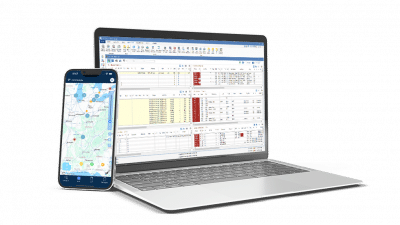
It’s built directly into PCS TMS with Cortex AI.
Because PCS has served as the operational system of record for fleets for nearly three decades, Cortex AI learns from the full lifecycle of freight operations inside the platform.
That includes:
- Load and opportunity intake
- Dispatch decisions and driver assignments
- Customer relationships and service patterns
- Financial outcomes and margin performance
By learning from these real operational patterns, Cortex AI can surface recommendations that actually reflect how successful fleets run their business.
Instead of forcing fleets into rigid models, the system helps teams:
- Identify better freight opportunities
- Prioritize loads based on profitability and fit
- Reduce empty miles and improve reload planning
- Make faster, more informed dispatch decisions
In other words, Cortex AI helps fleets apply decades of operational intelligence to every decision they make today.
That’s the difference between AI that looks impressive in a demo and AI that delivers results on real freight.
See how PCS TMS with Cortex AI helps fleets turn operational data into smarter decisions and stronger margins.
Get a demo and see how PCS TMS with Cortex AI is helping carriers streamline operations and uncover better opportunities across their network.