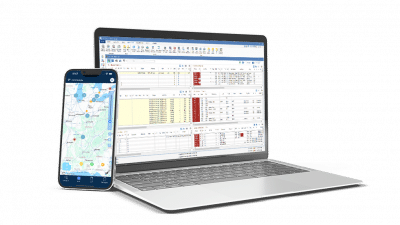
AI in fleet management is transforming how transportation teams plan, operate, and respond. Manual updates and spreadsheets are being replaced by systems that learn from live data and act in real time. From predicting when a truck needs service to adjusting routes on the fly, embedded intelligence is changing the pace and precision of fleet operations — turning information into action and data into ROI.
This post explores the most practical applications of AI in fleet management today.
We’ll break down how fleets are using it for core applications. These include predictive maintenance, routing, fuel use, load matching, safety, and customer updates. We’ll also look at the common roadblocks like bad data, driver pushback, and integration headaches, and how to tell which tools are worth it.
What is AI in Fleet Management?
AI in fleet management is about using data to make smarter, faster decisions. Fleets generate massive amounts of information from telematics, GPS, fuel cards, ELDs, and TMS platforms. Embedded AI ties it all together into a single decision layer, spotting patterns and surfacing recommendations that humans and spreadsheets can’t catch fast enough.
At its core, AI in fleet management processes data on vehicle health, driver behavior, fuel use, and route history to predict what will happen next and recommend the best action. That could mean flagging a truck for service before a breakdown, rerouting a driver to avoid an accident on the highway, or matching available capacity to the most profitable load.
For operations teams, this shifts the work from chasing updates to making proactive calls. Dispatch, safety, maintenance, and customer service can all work from the same live information instead of siloed reports. The payoff is clear: fewer delays, lower operating costs, and better service reliability.
Fleets of every size are already applying AI for fleet optimization to cut waste, keep assets moving, and build more predictable schedules.
Core Applications of AI in Fleet Management Software
AI now touches nearly every part of fleet operations. What used to be disconnected, reactive tasks can now be coordinated by intelligent systems that continuously learn from live data. Instead of chasing updates across multiple platforms, fleets gain a connected workflow that adapts in real time.
From there, a common question might be “What exactly is live data in relation to AI in fleet management?”
Live data is the constant stream of information coming from trucks, drivers, and supporting systems. Data points like GPS pings, engine diagnostics, fuel card swipes, ELD logs, weather feeds, and traffic updates. When AI processes this information in real time, it can spot issues early and even automate decisions before a human would normally respond.
The biggest gains come when AI is applied to the areas that carry the most cost and risk. Predicting problems and then finding solutions with measurable impacts on revenue and service quality is the goal. These improvements compound across the entire operation.
Here are the areas where it delivers the biggest impact for efficiency and growth:
- Predictive maintenance: Anticipates component failures and schedules service before breakdowns happen.
- Dynamic routing: Adjusts routes in real time based on traffic, weather, and delivery windows.
- Fuel optimization: Surfaces driving behaviors and routing patterns that reduce fuel spend.
- Load matching: Matches available drivers and equipment with the most profitable loads.
- Safety monitoring: Flags risky driving behaviors and creates opportunities for coaching.
- Customer communication: Automates updates with accurate ETAs and shipment status.
Each of these capabilities turns data into action, helping fleets move faster, safer, and with less waste.
| Area | Traditional Approach | AI-Driven Approach |
|---|---|---|
| Maintenance | Fixed schedules or reactive | Predictive, based on live data |
| Routing | Static, pre-set | Dynamic, adjusts in real time |
| Load Matching | Manual calls and spreadsheets | Automated, optimized recommendations |
| Safety | Incidents reviewed after the fact | Proactive monitoring and alerts |
| Customer Updates | Phone calls and emails | Real-time ETAs and automated notifications |
Now, each of these core applications will be broken down further. You’ll see how AI in fleet management can deliver solutions and streamline operations for your entire fleet.
Predictive maintenance
Unexpected breakdowns derail schedules. This leads to frustrated customers and eats into profits. Traditional maintenance schedules (based on mileage or fixed intervals) often lead to either over-servicing or missed issues.
AI predictive maintenance changes that process.
By analyzing live data from telematics, sensors, and ELDs, AI models flag early warning signs before failures happen. Instead of waiting for a breakdown, the system recommends proactive service — keeping trucks on the road and maintenance budgets under control. Instead of waiting for a breakdown, the system flags the truck for service before it causes downtime.
For fleet managers, these could potentially be some of the benefits:
- Reduced unplanned downtime: Fewer breakdowns mean fewer missed deliveries.
- Lower repair costs: Fixing an issue early costs less than a major failure on the road.
- Longer asset life: Vehicles stay in better condition with proactive maintenance.
- Higher safety standards: Issues like brake wear or engine faults are addressed before they put drivers at risk.
Dynamic routing
Traffic, weather, and customer demands change by the hour. This leads to a common problem:
Static routes often leave drivers stuck in congestion or showing up late to docks.
AI in fleet management recalculates routes in real time, factoring in traffic, weather, HOS, and customer priorities. Instead of static plans, fleets run on adaptive routing intelligence that keeps trucks moving, customers informed, and margins protected. It factors in delivery windows, fuel efficiency, driver hours of service, and even customer priorities before recommending the next move.
For dispatch, this means fewer last-minute calls and manual adjustments. For drivers, it means they’re less likely to get stuck in congestion or rerouted late. And for customers, it results in shipments that arrive when promised, backed by accurate ETAs. Over time, dynamic routing with AI in fleet management not only saves miles and fuel, but it also builds predictability into an area of fleet management that traditionally changes frequently.
For fleets, dynamic routing translates into:
- Fewer delays: Real-time adjustments keep trucks moving despite unexpected disruptions.
- Improved on-time delivery rates: Customers receive accurate ETAs and shipments that arrive when promised.
- Better fuel efficiency: Smarter routing reduces unnecessary mileage and idling.
- Higher driver satisfaction: Drivers spend less time in traffic and more time completing routes.
Fuel optimization
Fuel is one of the biggest expenses for any fleet, and small improvements in efficiency add up fast. Traditional monitoring methods rely on manual reporting or basic telematics. AI-powered fuel optimization goes further by analyzing vast amounts of driving and vehicle data to pinpoint where savings are possible.
AI tracks patterns like speeding, harsh braking, idle time, and poor route selection. It then connects those behaviors to fuel usage, highlighting which changes will deliver the greatest impact. Fleet managers using AI in fleet management can use these insights to coach drivers, adjust routes, or even flag vehicles with mechanical inefficiencies.
The benefits include:
- Lower fuel costs: Reduced idle time and optimized routes cut unnecessary spending.
- Better driver habits: Coaching based on real data builds long-term efficiency.
- Accurate performance tracking: AI removes guesswork by linking fuel usage to specific behaviors.
- Reduced emissions: Smarter fuel use helps fleets meet sustainability goals.
Load matching
One of the most challenging tasks in logistics is finding the right load for the right truck at the right time. Manual processes leave trucks running empty miles or sitting idle between jobs. AI-powered load matching eliminates that waste.
AI-powered load matching scans available loads, drivers, and equipment in real time — then layers in profitability, backhaul opportunities, and lane conditions. The result is higher revenue per mile and fewer empty trucks.
Here’s how that works:
The system pulls in real-time data on available loads, driver availability, equipment type, HOS limits, and location. It then layers on market conditions like lane rates, delivery commitments, and backhaul opportunities. AI can then run the calculations in seconds and recommend the highest-value match. This not only maximizes asset utilization but also helps drivers spend more time moving freight and less time waiting.
Benefits include:
- Fewer empty miles: Trucks get matched with loads closer to their current location.
- Higher revenue per mile: Smarter matching ensures equipment runs at full capacity.
- Faster turnarounds: Drivers and dispatchers spend less time searching for the next job.
- Better driver retention: A steady flow of optimized loads reduces frustration and downtime.
Safety monitoring
Safety has always been central to fleet management, but human oversight alone can’t catch every risk. AI in fleet management has safety monitoring tools to analyze driver behavior in real time.
Telematics and in-cab sensors feed data into AI models that surface risky behavior as it happens. Instead of waiting for post-incident reviews, managers get proactive alerts they can coach against — building safer fleets and lowering insurance costs.
This translates to:
- Fewer accidents: Risks are identified and addressed before incidents occur.
- Lower insurance costs: Improved safety records reduce premiums.
- Targeted driver coaching: Training focuses on the behaviors most likely to cause problems.
- Compliance support: AI surfaces hours-of-service violations and unsafe driving trends.
Customer communication
Shippers and customers expect constant visibility. A single late update can create frustration or damage trust. AI helps fleets deliver accurate information without adding more work to dispatchers or drivers.
By combining live location, traffic, and delivery data, AI generates proactive notifications and accurate ETAs. Customers get visibility without having to ask, and fleets reduce inbound “Where’s my load?” calls. This transparency builds stronger relationships and reduces inbound “Where’s my load?” requests.
Advantages include:
- Proactive updates: Customers are informed before they need to ask.
- More accurate ETAs: AI adjusts predictions based on real-world conditions.
- Reduced admin workload: Automated updates free up dispatch and customer service teams.
- Stronger customer trust: Consistency and accuracy build credibility over time.
Get the AI Advantage in Freight
Discover how smart fleets are using AI to cut wasted miles, boost margins, and ease dispatch pressure. Our guide shows practical ways to work smarter—not harder—with embedded AI.
Challenges of Implementing AI in Fleet Management
AI in fleet management comes with benefits across the entire fleet operations. But AI adoption comes with hurdles that can slow progress if fleets don’t plan for them.
Data quality issues
AI is only as good as the data it receives. If ELDs, telematics, or fuel card inputs are inaccurate or incomplete, the predictions will be off. Fleets need clean, consistent data streams to make AI models reliable. That may require auditing current systems, standardizing data entry, or upgrading outdated hardware before rolling out AI.
Driver adoption
Drivers are the backbone of every fleet, and their buy-in is essential. Some may view AI tools as intrusive monitoring instead of support. To counter this, managers should focus on how AI helps drivers. The tangible benefits and hard ROI help drivers integrate AI into their process. Clear communication and training go a long way toward building trust and adoption.
System integration
AI tools don’t deliver much in isolation. They need to plug into your existing TMS, telematics, compliance, and accounting platforms to provide value across the operation. A solution that can’t integrate smoothly often creates more work instead of less. Fleets should prioritize platforms that come with proven integrations and open APIs.
Identifying real AI
The market is full of tools branded as AI in fleet management that are just automated rules or dashboards. True AI continuously learns from live data, adapts to changing conditions, and recommends actions. When evaluating solutions, fleets should ask vendors to show how the system makes predictions, what data it uses, and what decisions it automates.
A good test is to look at how the tool responds in real time. If the platform only provides historical reports or refreshes on a set schedule, it’s not true AI. Real AI tools will reroute a driver when traffic conditions change, flag a vehicle before it breaks down, or match a load to the closest available driver without human intervention.
Fleets should also ask for proof of outcomes, not just product demos. Vendors that can show reductions in empty miles or lower maintenance costs are demonstrating real AI in action. Those that only offer dashboards or surface-level automation may create more noise without delivering measurable results.
Addressing these challenges takes careful evaluation and a phased approach. The goal should be finding a dedicated system that streamlines the process and keeps trucks rolling. PCS Software is a leader in that type of applied AI for fleet operations.
How PCS Applies AI in Fleet Operations
PCS made a choice to move away from using AI as just an add-on.
Cortex AI is built directly into the PCS TMS. This turns fleet data into actionable insights across dispatch, billing, routing, and planning. Instead of layering AI on top of disconnected systems, PCS uses it at the core of the platform so fleets get results where decisions are made:
- Smarter dispatch: AI recommends optimal routes and schedules based on live traffic, weather, and driver availability, keeping trucks moving and customers satisfied.
- Automated workflows: Routine tasks like billing, driver updates, and load assignments are handled in the background, reducing paperwork and freeing teams to focus on exceptions.
- Real-time visibility: Teams track shipments, driver status, and potential disruptions from one screen, so everyone works from the same accurate information.
- Faster decisions: Cortex AI flags what matters most so managers can act before problems escalate. Those items can include late loads, high fuel burn, or compliance risks.
- Integrated performance tracking: Profitability, fuel efficiency, and service levels are tied directly to operational data, giving leadership a clear view of ROI.
| Capability | Generic AI Tool | PCS with Cortex AI |
|---|---|---|
| Dispatch | Basic route adjustments | Smarter dispatch with real-time data |
| Workflows | Limited automation | End-to-end automation across billing, load updates |
| Visibility | Siloed tracking | Unified view across shipments, drivers, and exceptions |
| Decision Support | Static reporting | AI surfaces what matters for faster action |
The difference is that PCS applies AI where it makes the most impact. Instead of chasing a trend, the platform uses real data to keep fleets profitable, safe, and efficient. The result is a system that helps carriers and shippers grow without adding complexity.
Streamline Your Operations with AI in Fleet Management From PCS
AI in Fleet Management delivers the biggest gains when it’s built into daily workflows.
PCS combines Cortex AI with a fully integrated TMS, so every decision — dispatch, routing, billing, customer updates — runs on live data from a single system of record.
- Real-time routing and dispatch recommendations that adjust as conditions change
- Automated billing and load updates that remove manual steps
- Visibility across drivers, assets, and shipments in one unified view
- Alerts that surface problems early so your team can stay ahead of them
The result is a system that turns AI and systems into real ROI.
Ready to see how it works?
Request your personalized demo today and discover how Cortex AI helps you run a faster, more efficient fleet.
FAQ
Yes. PCS connects with more than 70 industry systems, including ELDs, fuel programs, and compliance tools. This ensures AI capabilities work across your existing tech stack.
PCS Cortex AI processes data from your TMS, ELDs, GPS, telematics, fuel programs, and load boards. This unified view is what makes the predictions accurate and actionable.
ROI comes from reduced fuel costs, fewer breakdowns, lower insurance premiums, and higher driver productivity. Fleets see measurable savings within months of adoption.
No. Mid-size and regional fleets benefit just as much as enterprise carriers. PCS TMS scales AI capabilities to match the size and needs of your operation.
It’s the use of artificial intelligence to optimize routing, maintenance, safety, load matching, and customer communication. AI tools process fleet data to automate decisions and predict outcomes more accurately than manual methods.
AI monitors driving behaviors such as speeding, harsh braking, and fatigue. Fleet managers can use these insights for real-time alerts and targeted coaching, reducing accident risks.
Most fleets start small, often with predictive maintenance or routing, and expand as they see results. PCS supports phased adoption so teams can roll out AI without disrupting operations.
No. AI in Fleet Management is designed to assist, not replace. It automates repetitive tasks and surfaces insights, but people still make the final calls.