Diesel averaged $6.18 a gallon in October 2026, according to the EIA. That’s $2.51 more than a year earlier.
You can’t negotiate with the pump. But the pump isn’t where most fleets lose the fuel fight. They lose it at dispatch, before the truck moves. That’s where you still have control, and where smart fleet planning cuts fuel costs.
Mark Hill, CEO of PCS, sat down with FreightWaves analyst Thomas Wasson to talk about exactly that. Here’s what mattered.
Your best dispatcher’s playbook has an expiration date
Most fleets plan one truck and one lane at a time, maybe a leg or two out. It runs on what the dispatcher knows. For years, that was enough.
It isn’t now. What worked twelve months ago was built on cheaper diesel and a looser capacity market. Mark’s take: that knowledge has to rebuild itself every three months.
Here’s what it looks like. A Midwest carrier runs contract freight from Chicago into San Antonio. Their best shipper sits in Houston. Every week, someone asks the same question. Reposition 3 to 4 hours to Houston, or find a spot load home? The answer changes with fuel, rates, and where the driver needs to be Friday night.
Multiply that by every truck on the board. No one holds it in their head.
Related Guide
Free Guide: Why Your Best Dispatchers Still make Bad Calls
Plan on three things, not one
Rate per load is the easy number. It’s also how you strand a truck.
Mark’s framework:
- Economics: rate, total trip revenue, net revenue per truck per week
- Operations: route efficiency, wear and tear, distance to a shop
- Driver preference: home time, dwell time, which shippers they’ll work with
The third one is the one fleets skip. It’s also the one that decides whether you keep the driver. The best dispatchers know who has to be home Friday and who’ll stay out Saturday for an extra 25 cents a mile.
There’s a payoff, too. Cut the deadhead between stops from 300 miles to 50, and you may find an extra day in the week. That’s an extra day off for a driver without losing a load.
Do the blocking and tackling first
Software can’t fix a network with no shape. Mark and Thomas agreed on the order:
- Land an anchor customer or two in a manageable geography.
- Build density in that region.
- Expand to the adjacent nodes.
Mark said he’s heard one question from midsize fleet executives more in the last six months than in the two years before it: what are we not going to do? That’s discipline. A fleet running only spot freight can still optimize, but the plan keeps breaking and the stress lands on drivers and dispatchers.
You’ll only trust a plan you can see inside
Dispatchers override black boxes. They should.
Mark’s rule for planning technology is simple. Make every dispatcher as good as your best one, and show the reasoning on every recommendation.
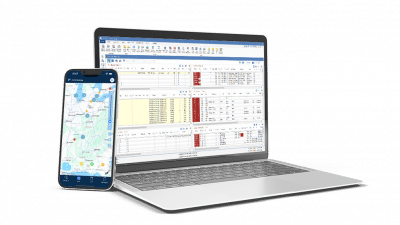
PCS built Dispatch powered by Cortex that way. Before launch, the team ran the optimization model silently against a beta group for about six months and compared it to what human dispatchers actually chose. That’s where driver preference came from. The best dispatchers knew their drivers’ schedules better than any model did, so Cortex had to learn it.
You can borrow the approach with any tool. Run the plan in parallel. Compare it to what your team did at the end of the week. Tweak it. Then expand.
One more tip from Mark for getting a team on board: get them using ChatGPT or Claude in their day-to-day work first. It makes AI inside the TMS far less foreign.
The cheapest fuel stop isn’t always the cheapest
Fuel routing works when two things are true: the price is competitive, and there are enough locations to give drivers real options.
Then comes the harder part. Drivers have strong stop preferences. Send them to a stop that’s 5 cents cheaper with three trucks queued ahead, and you’ve added time and lost a driver’s goodwill. Mark’s advice: make the right stop easier, not just cheaper, and put money behind it.
That’s the idea behind PCS Fuel Savings Advantage. PCS customers get negotiated diesel pricing at 3,000+ truck stops, backed by the buying power of the whole customer community. Average net savings run $0.51 to $1.00 a gallon. Savings vary by route, network, and market conditions.
Don’t wait for relief
Mark was blunt: “Diesel is not going to magically go down.” Even if the geopolitical piece resolved next week, he sees 8 to 12 months before the supply side relaxes. The EIA expects diesel to average about $4.50 a gallon in 2027, still well above recent norms.
Big carriers forecast fuel 12 to 18 months out. Most small and midsize fleets plan a few weeks out. That gap is where margin goes.
Do the math on your fleet
One point of deadhead costs a 100-truck fleet roughly $95,000 a year in diesel at today’s prices. (Based on 100,000 miles per truck, 6.5 mpg, and $6.18 a gallon. Scale to your fleet.)
The guide, The Fuel Problem Is a Planning Problem, walks through the full math, the five levers that cut fuel cost at fleet scale, and an eight-question self-assessment you can score in five minutes.