Fleet technology is getting more capable every year.
But knowing what happened on a truck and knowing what to do next are two different problems — and they need two different tools.
The real-time signals coming off a modern fleet — location pings, safety events, hours-of-service status, fuel burn, driver behavior scores — are genuinely useful. But signals aren’t decisions. They’re inputs.
When a driver calls it early, something breaks down, or a delivery window closes faster than expected, your team doesn’t need more data. They need to know which load gets reassigned, which driver is available, and how to protect the customer commitment — fast, and without pulling up four different screens to figure it out.
That’s not a hardware problem. It’s an operations and dispatch problem. And it requires a different kind of tool.
The real cost is in the decision window.
Most fleets know exactly what the technology captured after the fact. Fewer can say their dispatchers had everything they needed to act on it in the moment. That gap — between event and decision — is where time gets wasted, loads get mismanaged, and margin disappears.
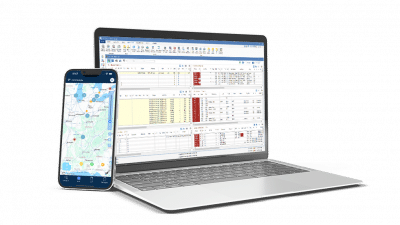
A TMS isn’t a passive record-keeper. It’s the decision engine at the center of daily operations: load coverage, driver-to-load matching, billing, settlement, customer communication. These aren’t peripheral functions. They’re the core workflows that determine whether a fleet makes money on any given day.
When those workflows live in a purpose-built TMS, dispatchers work faster, with fewer errors, and with full operational context in one place. When they’re spread across platforms that weren’t designed around them, the gaps show up in performance.
Purpose-built still matters.
The fleets running the tightest operations are deliberate about their tech stack. They’re not chasing the platform with the most features. They’re asking a different question: which tool was actually built around the workflows that matter most — and can it perform when things get hard?
Connected systems that share data cleanly have real value. The best operators use them. But they’re also clear-eyed about what each tool is built to do. Telematics captures what’s happening. A TMS turns that into action. Those aren’t competing ideas — they’re complementary ones. The problem isn’t having both. It’s expecting one to do the other’s job.
More fleet tech is coming. The operators who use it well will be the ones who know exactly what they’re buying — and what job they’re hiring it to do.