Carrier onboarding verifies a carrier’s authority, insurance, and identity. Once verified, the carrier gets set up as dispatch-eligible in the TMS. Onboarding begins only after a broker commits to the carrier. A claim turns the onboarding file into evidence. Brokers leaned on federal preemption for years while circuit courts split. Montgomery v. Caribe Transport ended the ambiguity in May 2026. The ruling opened brokers to negligent selection suits nationwide.
Below are the five steps in order and the fraud patterns built to clear routine checks. Chameleon carriers and spoofed identities lead the list.
Key Takeaways
- Vetting and onboarding are two different jobs. Vetting is the decision to work with a carrier. Onboarding is the verification and setup work that follows.
- The legal stakes changed in 2026. After Montgomery v. Caribe Transport, onboarding documentation is discovery material, so the file has to show that the safety data was reviewed and that the red flags in it were acted on.
- A defensible carrier onboarding process runs five steps in order. Capture identity from the federal record, verify authority and safety, screen for fraud, collect and verify the carrier packet, then apply the brokerage’s own risk thresholds.
- “Unrated” is the normal status for most carriers. Nine out of ten active interstate carriers have never had a formal FMCSA safety rating, so disqualifying on that basis alone cuts good carriers out of the network for no reason.
- Onboarding is a state to maintain, not a gate to clear. When the onboarding tool and the dispatch tool are separate systems, a carrier can go from compliant to non-compliant and still get a load.
Carrier onboarding vs. carrier vetting
Carrier onboarding is the verification and carrier setup work that happens after a brokerage has already decided a carrier is worth using. That work means collecting the carrier packet, confirming its contents against the federal record, and setting the carrier up so dispatch can assign loads.
Vetting comes first. That’s the judgment call, weighing a carrier’s safety data, insurance limits, equipment, and lane fit against whether to do business at all. Onboarding executes that decision and documents it.
Each step fails in its own way. Weak vetting brings on a carrier that should have been declined. Weak onboarding means a sound decision looks indistinguishable from a careless one, because nothing in the file shows what was reviewed.
Why carrier onboarding carries more legal and fraud risk in 2026
The Supreme Court closed the preemption argument
On May 14, 2026, the Court ruled 9-0 in Montgomery v. Caribe Transport that federal law does not shield brokers from state negligence lawsuits over carrier selection. The working standard is ordinary care. A broker is expected to review the safety data that was available, act on the red flags in it, and be able to show that work later. That last part is where onboarding stops being administrative. The file has to demonstrate a decision, complete with what was seen and when, because it may be read by someone whose job is finding the hole in it.
Fraud shifted from break-ins to identity
CargoNet put cargo theft near $725 million in 2025, up roughly 60% year over year, with average theft value around $274,000. Overhaul’s Q1 2026 data shows deceptive-pickup schemes up 31%, even as total theft incidents fell, and roughly one theft in three now starts with a fraudulent carrier identity. In a deceptive pickup, a fraudster uses a borrowed or fabricated carrier identity to have the freight handed over voluntarily at the dock. Nobody breaks a lock, and the dock crew helps load the truck.
The 5 steps of the carrier onboarding process
Five steps, in this order. The sequence matters as much as the steps, because each one narrows what the next one has to catch.
- Start with the federal record. Pull identity from the MC or USDOT number in the FMCSA record and work outward from there. A carrier packet arriving by email is a claim about who a carrier is, and the federal record is the confirmation. Reversing that order is how impersonation gets through, because a forged insurance certificate and a spoofed email signature are cheap while a real operating authority is expensive.
- Verify authority and safety status before offering a load. Confirm the operating authority is active, in the right category for the freight, and matches the contracting entity. Check the safety rating and the inspection history behind it. A load tendered to an unconfirmed carrier is a risk already accepted.
- Screen for fraud signals as a distinct step. Authority verification confirms that an entity exists and is authorized. It confirms nothing about whether the person on the phone is that entity. Compare the phone number, email, and address against the FMCSA record, and treat a recent change to any of them as a reason to slow down.
- Collect and verify the carrier packet. W-9, current certificate of insurance (COI), a signed broker-carrier agreement, and payment details. Verify means confirming coverage with the agency that issued the policy, and matching every name and address against the federal record.
- Apply brokerage thresholds last. FMCSA verification is the baseline everyone shares. Each brokerage layers its own risk tolerance on top, including minimum cargo and liability limits, acceptable inspection history, how much fresh authority is acceptable, and which lanes or commodities require a tighter standard. PCS holds those thresholds as dispatch defaults, so every desk applies them the same way.
What does a carrier’s FMCSA safety rating actually mean?
Less than most brokers assume. A formal safety rating only exists after FMCSA completes a compliance review, and most carriers have never had one. The three statuses call for different responses.
| Rating status | What it means | What it should trigger |
| Unrated | No compliance review completed | Normal for most carriers. Read the underlying inspection and violation data. |
| Conditional | Review found deficiencies | Heavy scrutiny before freight moves. This was the profile at issue in Caribe Transport. |
| Unsatisfactory | Review found serious deficiencies | Legal disqualifier. Do not dispatch. |
Conditional calls for a documented manual review of inspection history and recent violations before each load moves, and Unsatisfactory bars dispatch outright. The distribution is the part brokers misread. Roughly 92% of active carriers have never had a compliance review, so treating Unrated as a red flag cuts good capacity for no reason.
FMCSA stopped publishing category-level safety percentiles for property carriers under the FAST Act, so the underlying inspection data has to carry the analysis. That means roadside inspection results, violation history, and crash records. National out-of-service rates run around 21% for vehicles and 6% for drivers, which gives a benchmark for reading a carrier’s own numbers.
How do impersonation and chameleon carrier fraud work?
Both patterns steal legitimacy that someone else earned. Impersonation borrows a real carrier’s clean identity. Chameleon carriers rebuild a shut-down operation under new authority. In each case the record looks fine, because the record belongs to somebody other than the person on the other end of the phone.
Impersonation works because a clean safety record has resale value. A fraudster copies a legitimate carrier’s MC number, authority details, and insurance information, then substitutes their own phone number and email. Everything verifies except the contact path. FMCSA’s guidance addresses this directly. When contact details don’t match, call the number in the federal record and disregard the one supplied in the email. A broker who makes that call on a spoofed setup usually hears it in the first ten seconds, when the dispatcher on the line has no idea which load is being discussed.
Chameleon carriers are operations that were shut down and reborn under a new MC number, usually sharing an address, an officer, or an insurance agency with the defunct entity. Authority under about 90 days old earns extra scrutiny for this reason, and some large brokerages decline it outright. Aged authority with a recent ownership, name, or address change deserves the same look.
FMCSA’s March 2026 bulletin warned the industry that a USDOT or MC number cannot be bought, sold, or leased, and that improperly transferred numbers will be deactivated.
What’s in a carrier packet?
- Carrier profile form. Contacts, equipment, and lanes. Check each field against the FMCSA record, not against the rest of the packet.
- Signed W-9. Establishes the legal entity and tax identity behind the payment, which should match the name on the operating authority.
- Current certificate of insurance. Common broker floors run $1 million auto liability and $100,000 cargo, though the cargo limit should track the value of the freight. The certificate must name the brokerage as certificate holder, and must arrive from the agency that issued the policy.
- Payment and remittance details. ACH information, plus a notice of assignment when the carrier factors.
- Signed broker-carrier agreement. Sets the terms, liability allocation, and anti-double-brokering language that governs if something goes wrong.
- Verified operating authority. Active, in the right category for the freight, and confirmed against the FMCSA record.
- Current MCS-150 filing. Must be refreshed every two years or the DOT number can be deactivated. Check the filing date itself, since an old filing still shows up as a filing.
Payment setup is the part of the packet most onboarding guides skip, and it carries fraud exposure of its own. Payment-redirection scams work by changing remittance details mid-relationship, usually by email and usually with some urgency attached. Confirm any change by calling a number already on file. When a carrier factors, the notice of assignment governs who actually gets paid, so verifying it with the factoring company directly closes the most common gap between an approved carrier and a misrouted check.
PCS stores verified authority and insurance details on the carrier record itself, so the packet the ops team assembled becomes the single record dispatchers work from.
Why continuous carrier monitoring has to reach dispatch
Approval expires quietly. A carrier who cleared every check in January can have a policy cancel in March and an authority downgrade in April, and nothing about that reaches the carrier record unless compliance monitoring is actively checking. The carrier keeps taking loads because the system still says approved. Under an ordinary care standard, “verified at intake” is a weak answer when the question is about a load moved six months later.
The handoff between systems is where the gap opens. When onboarding runs in one tool and dispatch runs in another, the compliance picture is only accurate at the moment of the last export, and everything after that is assumption. Nobody makes a decision to dispatch a non-compliant carrier. The decision gets made for them by data that stopped updating.
PCS Broker Compliance Management checks FMCSA authority, insurance, and safety data at the point of dispatch, so every load gets the same review the carrier got at intake, with thresholds that warn or block automatically against limits the brokerage sets. Carrier records sync with Highway on an automated weekly cycle, and every change is logged with before-and-after values and a timestamp. That log is the record the Caribe Transport standard asks for, built as the work happens.
Import vetted carriers without re-entering their data
Most carrier onboarding software hands off to the TMS and stops there. The vetting work finishes in one system, and somebody keys the carrier into another. Every field is a chance to introduce an error, and the copy is stale the moment it’s made. Industry estimates put manual carrier onboarding at 35 to 45 minutes of ops time per carrier.
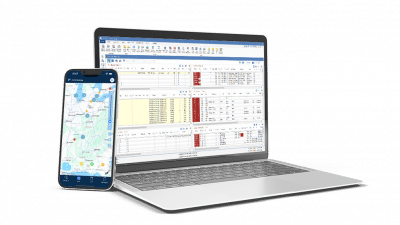
PCS imports vetted carrier profiles from My Carrier Packets and Truckstop RMIS in one click, landing verified data directly in the TMS carrier record. The carrier that cleared compliance is the same carrier dispatch sees, with no transcription step between the two. PCS connects 70+ integrations across ELDs, fuel cards, and load boards, so carrier data lands in dispatch, accounting, and compliance workflows as the work moves.
For asset-based brokerages, this is one workflow. Most onboarding content assumes a pure brokerage. PCS runs owned fleet dispatch and brokered freight on the same platform. One ops team works one system whether the load goes on a company truck or a partner carrier.
What slow or disconnected onboarding costs a brokerage
An approved carrier sitting on hold while paperwork moves is a carrier taking someone else’s load. When that happens, the sourcing and vetting work gets thrown out and repeated on a replacement. That’s the visible cost, and it’s the smaller one.
The higher cost is an indefensible carrier decision. After Montgomery v. Caribe Transport, the standard turns on showing what was known, when, and what was done about it, for the specific load in question.
Since 1996, PCS has built trucking software around how brokerages run. By connecting onboarding to dispatch on one platform, PCS builds the compliance record as loads move, so capacity gets booked quickly and the record is still there when a claim lands.
Schedule a demo to walk through a live onboarding workflow end to end, from the first FMCSA check through dispatch and compliance monitoring.
Frequently asked Questions
Carrier onboarding, also called carrier setup or freight carrier onboarding, is the process of verifying a carrier’s identity, operating authority, insurance, and safety record, then setting that carrier up as dispatch-eligible in the TMS. It follows carrier vetting, which is the earlier decision about whether to work with the carrier at all.
Manual onboarding runs 35 to 45 minutes of ops time per carrier by industry estimates, and elapsed time stretches to days when document collection and follow-up drag. Automated verification and direct import from vetted networks cut the active work to minutes and the elapsed time to a day or two, mostly by removing re-entry and document chasing.
Unrated means FMCSA hasn’t completed a compliance review, which describes the large majority of active interstate carriers. Read the roadside inspection record and crash history underneath it, then decide from there.
Without continuous carrier monitoring, it goes unnoticed until a claim or an audit surfaces it. PCS runs dispatch-linked compliance checks that catch the change before the next load is assigned, which is the difference between a caught problem and a legal one.
A signed W-9, a current COI at the brokerage’s required limits, a signed broker-carrier agreement, payment and remittance details, and a current MCS-150 filing, with operating authority verified against the FMCSA record.
No, they’re distinct steps. Vetting is deciding whether to work with a carrier. Onboarding is verifying and documenting that decision, then setting the carrier up as dispatch-eligible in the TMS.